
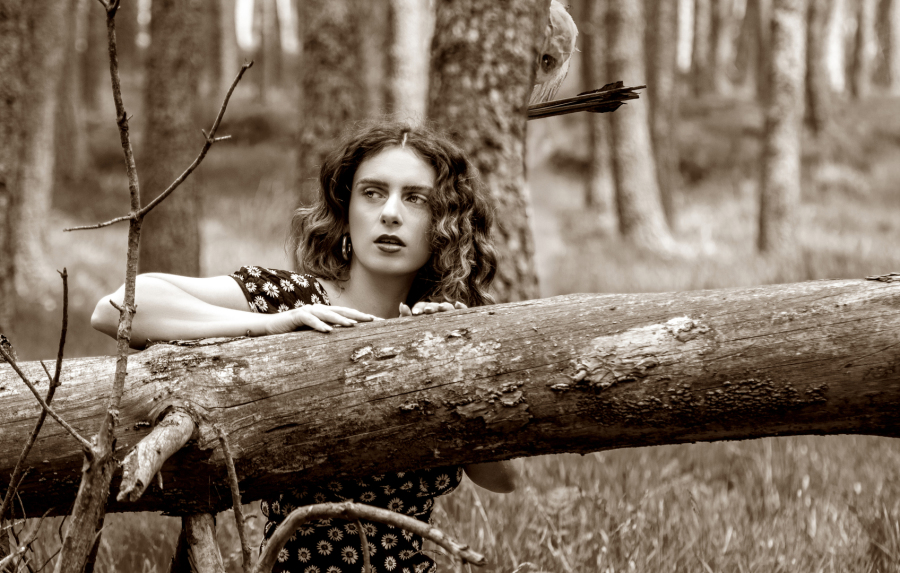
1910-1920 Vintage Style Photography
The sepia warmth and sculpted atmospheric light give the photographs a serene, early‑twentieth‑century dignity. Mist, drifting smoke, and clouded diffusion soften the models into a light, dreamy blur, while the purposeful ICM removes structural detail in the style of Edward Steichen, Baron Adolf de Meyer, Curtis Moffat, Herb Ritts, Man Ray and George Hurrell. A hint of fine film grain — noticeable but never overbearing — adds to the historical character, completing the illusion of a vintage plate from the 1910–1930`s era.
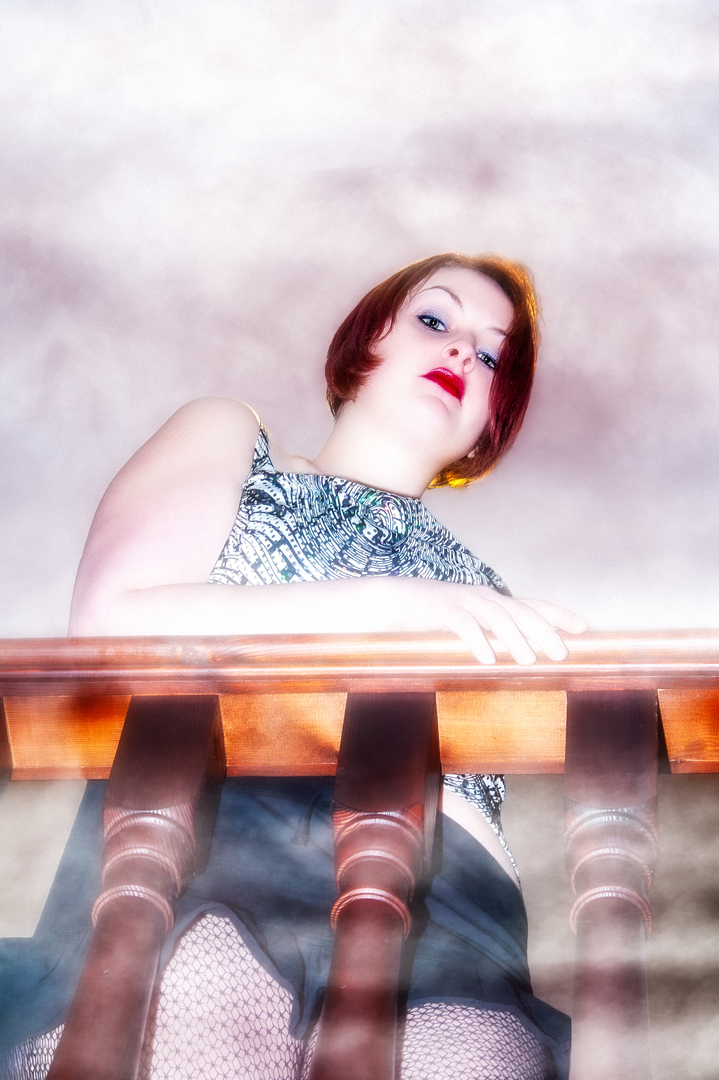 The Balcony Witness : A Poirot Noir Cafe Moment (1934)
In 1934, Sabine Verdonk stands above the smoky balcony, she pauses on the balcony, the smoke drifting around her like a secret. The scene invites the viewer to decide: is she the
suspect, the lover, or simply the one who knows more than she says
Influenced by the softfocus elegance of Baron de Meyers 1910s - 1920s style and the surreal, dramatic angles of Man Rays 1920s - 1930s period, blending European cafe mystery with
classic noir atmosphere
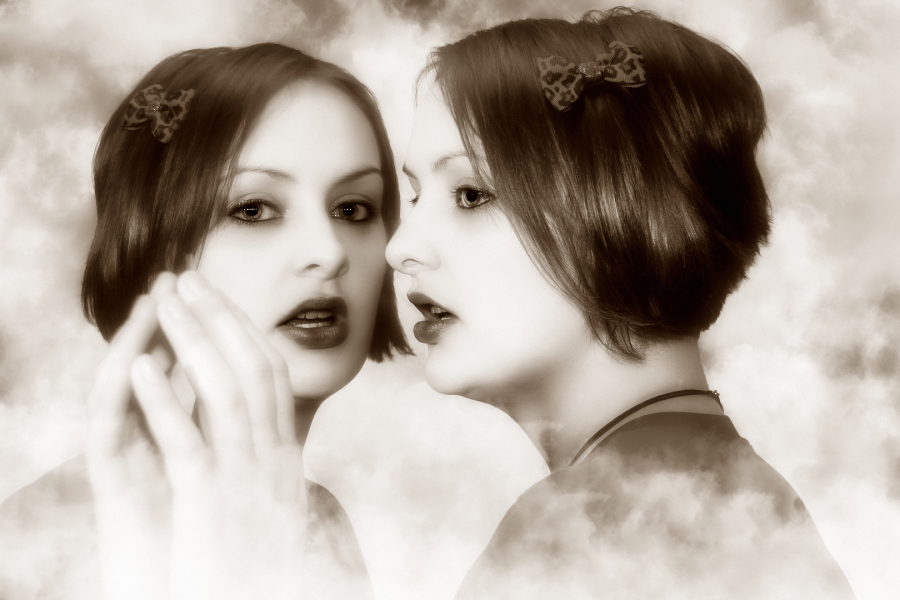 Through the Smoky Mirror - A Mirror of Secrets 1934
In 1934, Sabine Verdonk lingers before the smoky mirror, her reflection drifting in and out like a whispered secret. She isn1t posing - she`s studying herself, or perhaps the version of herself she shows to others. The smoke softens the room around her, inviting the viewer to decide whether she is the suspect, the lover, or simply the one who knows more than she ever says.
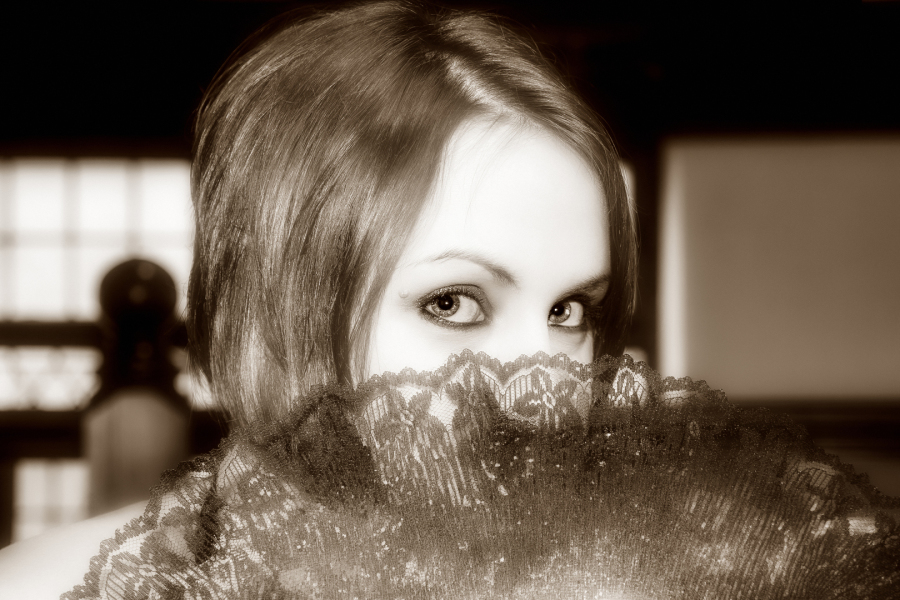 A Suspicious Glance - 1934
Sabine Verdonk hides behind a lace fan in a 1934 café mystery, her wide eyes sharp and mischievous — teasing Poirot, distracting him, or quietly plotting, innocent or playful or a villain pretending charm....Influenced by the soft‑focus elegance of Baron de Meyer’s 1910s–1920s style and the surreal, dramatic angles of Man Ray’s 1920s–1930s period, I use fine grain, subtle Gaussian blur and a gentle cinematic glow to blend European café‑mystery style with the quiet tension of a classic Hercule Poirot thriller
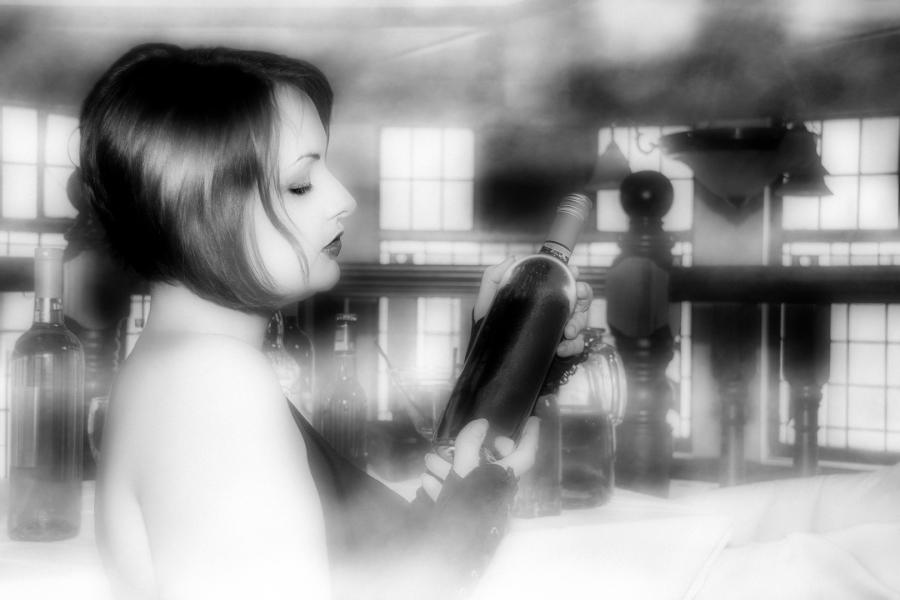 Which Bottle Contains the Poison - 1934
In 1934, Sabine Verdonk studies a bottle of wine inside a smoky European café, her expression caught between mischief and calculation. Her eyes stay on the bottle studying it calmly, as if she alone knows which drink hides the poison — or whether she is simply playing innocent, a charming villain in disguise. The moment hangs in quiet tension, like a missing frame from a Hercule Poirot mystery....
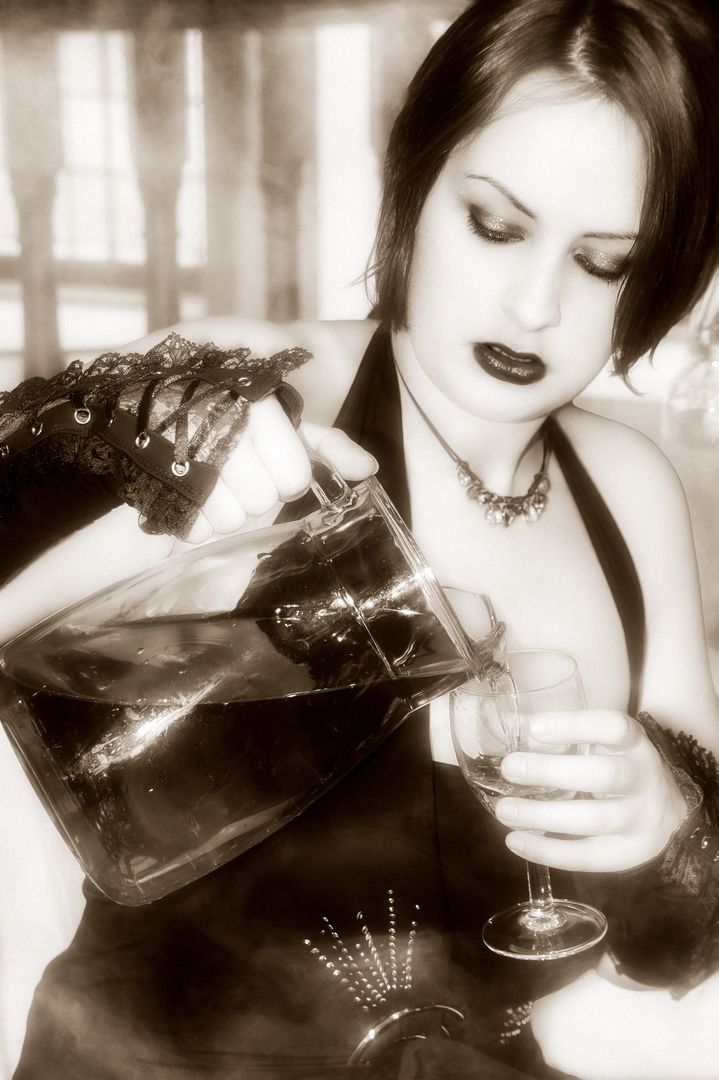 The Glass She Never Drinks - 1934
In 1934, Sabine Verdonk pours a glass she never intends to
drink, her lacegloved hands steady and deliberate. The moment feels ritualistic part seduction, part warning as if she is preparing evidence, offering temptation, or quietly controlling the room from
behind her calm expression
Influenced by the softfocus elegance of Baron de Meyers 1910s-1920s style and the surreal,
dramatic angles of Man Rays 1920s-1930s period, I use fine grain, mist brushes, subtle Gaussian blur and a gentle cinematic glow to blend European cafemystery style with the quiet tension of a
classic Hercule Poirot thriller
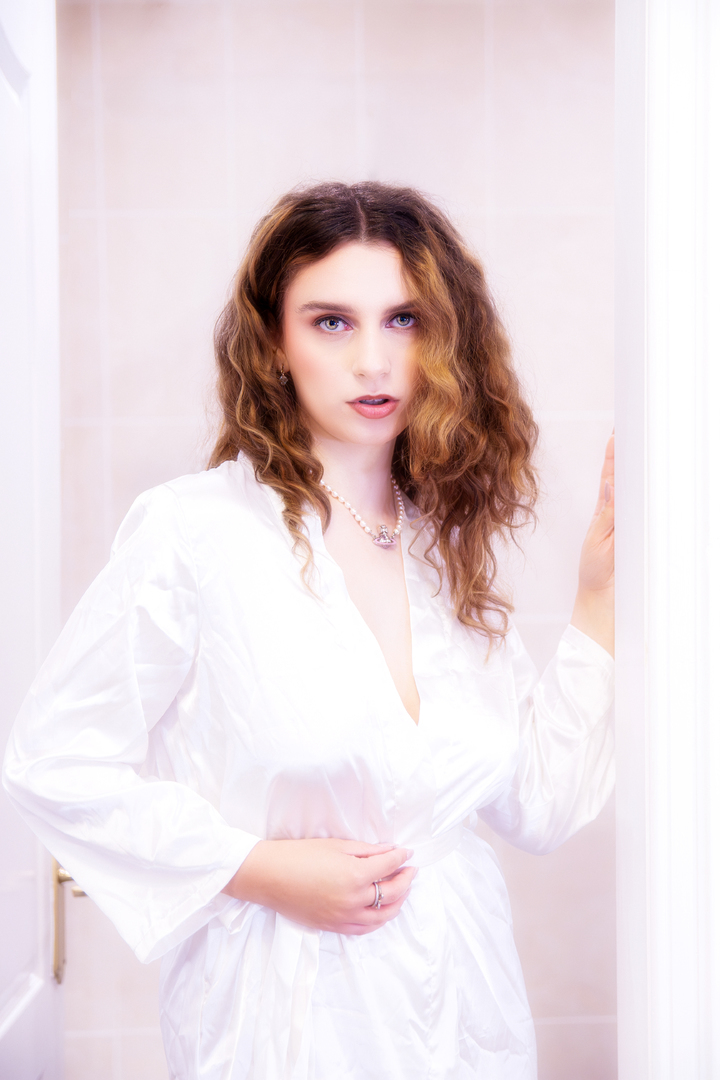 La Douche: Ava Devereaux Paris 1936
At the Prince de Galles, Paris 1936, Mademoiselle Ava Devereaux radiates
pure high-key glamour in Room 101 shower. Her presence wrapped in a luminous white glow that softens the entire scene with that inviting look of hers. A little rising steam drifts behind her in slow,
merging with the brilliance of the light. Draped in a silk robe that clings to the light like molten pearl, she becomes the distilled essence of Parisian decadence - ethereal, poised, and
irresistibly oh-la-la
To shape the atmosphere in the spirit of George Hurrell`s classic portrait style, I layered a small amount of fine film grain for authentic period texture, letting it settle delicately into the highlights. A controlled Gaussian blur softened the brightest transitions, giving the glow a signature, velvety bloom. This subtle touch deepens the dreamlike mood and completes the sense of vintage cinematic luxury and Hollywood glamour - A Hurrell`s 1930s MGM studio look
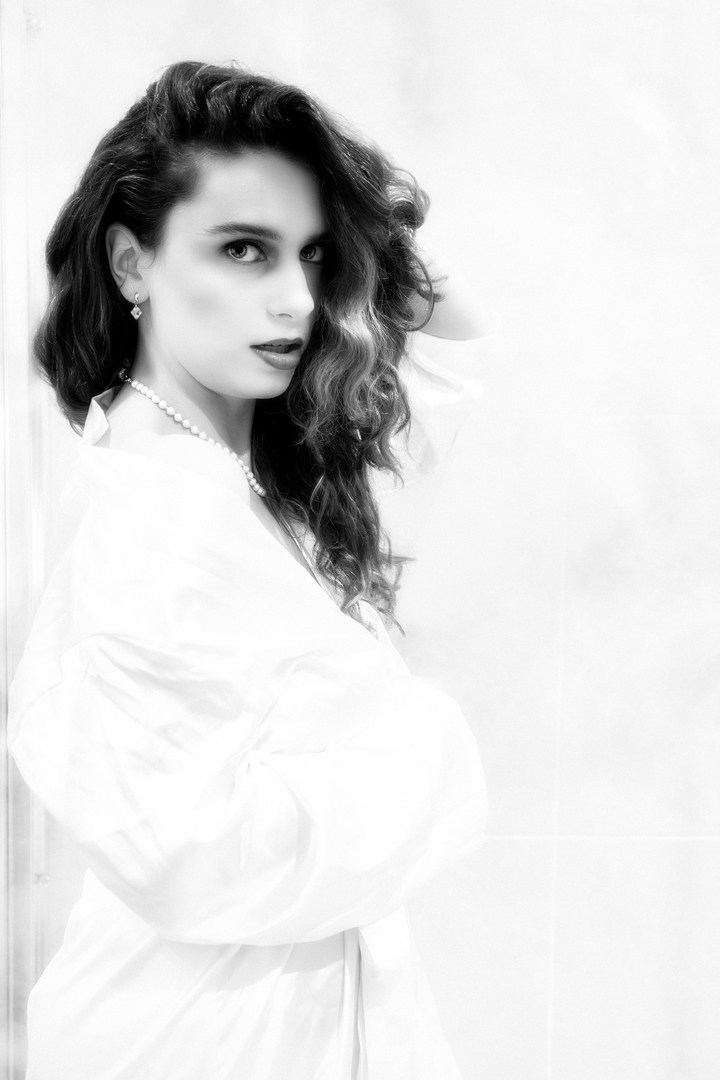 Ambassador Hotel Suite 4: Shower Scene 1938
In the legendary Suite 4 of The Ambassador Hotel, Los Angeles, 1938, Mademoiselle Ava Devereaux radiates pure high-key glamour. A shower scene captured within her
private en suite, she is wrapped in a luminous white glow that softens her signature inviting gaze
As rising steam drifts around her, merging with the brilliance of the light, her silk robe clings like molten pearl - the distilled essence of Californian decadence. This piece is a poised, ethereal
reimagining of George Hurrell’s classic Hollywood glitz, staged within the sanctuary of the hotel's most famous bungalow suite
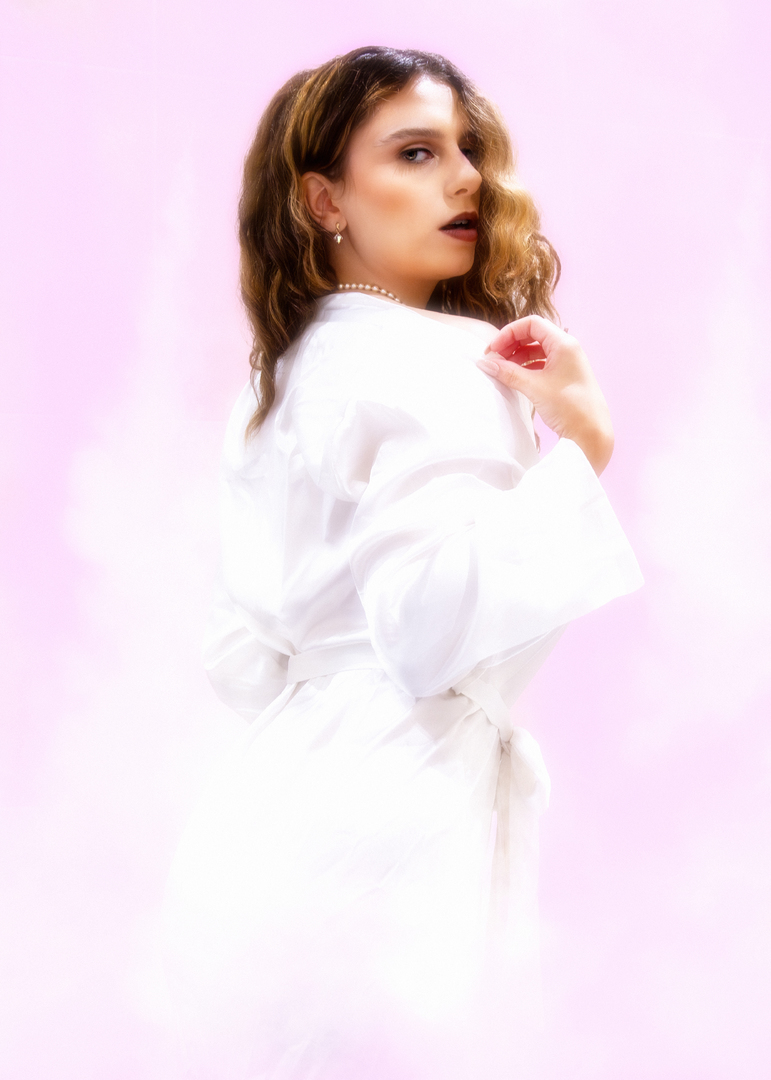 Mademoiselle Ava Devereaux at the Hotel Adlon Berlin 1935
At the Hotel Adlon, Berlin 1935, Mademoiselle Ava Devereaux glows in a bright, dreamy wash of pink colours - the kind of soft, radiant palette that feels lifted straight from a Curtis Moffat inspired Vogue fantasy. Inside the en suite, thick steam rises in cool, pinkish curls, drifting across her and accentuating the elegant line of her robed figure. The whole scene feels lush, steamy, and boldly sensual - the height of 1930s European luxury, where colour, heat, and glamour fuse into one luminous moment
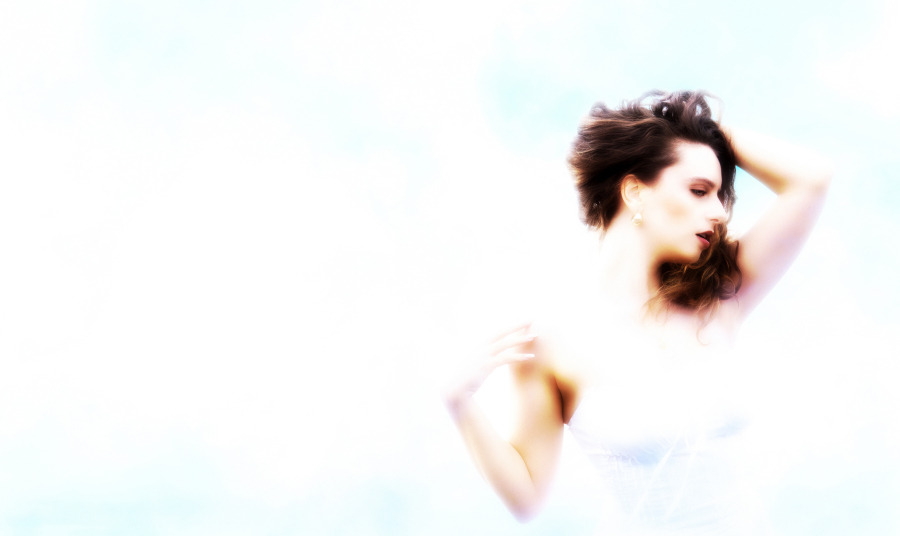 1980s Soft Focus with 1930s Screen Elegance
A contemporary portrait blending 1980s glamour styling with the soft, luminous aesthetics of 1930s Hollywood photography. High key light, diffused highlights, and sculptural posing create a cinematic, screen era elegance. The image is finished with subtle Photoshop overlays, cloud and mist effects, gentle Gaussian blur, and a dreamy glow, enhanced by fine film style grain. Deep, expressive tones inspired by classic portrait photographers give the piece a rich, atmospheric presence suitable for fine art display.
Influenced by Herb Ritts and George Hurrell, I shaped this image with controlled Gaussian diffusion, soft atmospheric glow, and fine film style grain to echo the dreamlike luminosity of early 1930s Hollywood through a distinctly 1980s colour sensibility. This approach pays tribute to the high fashion glamour of the Vogue era.
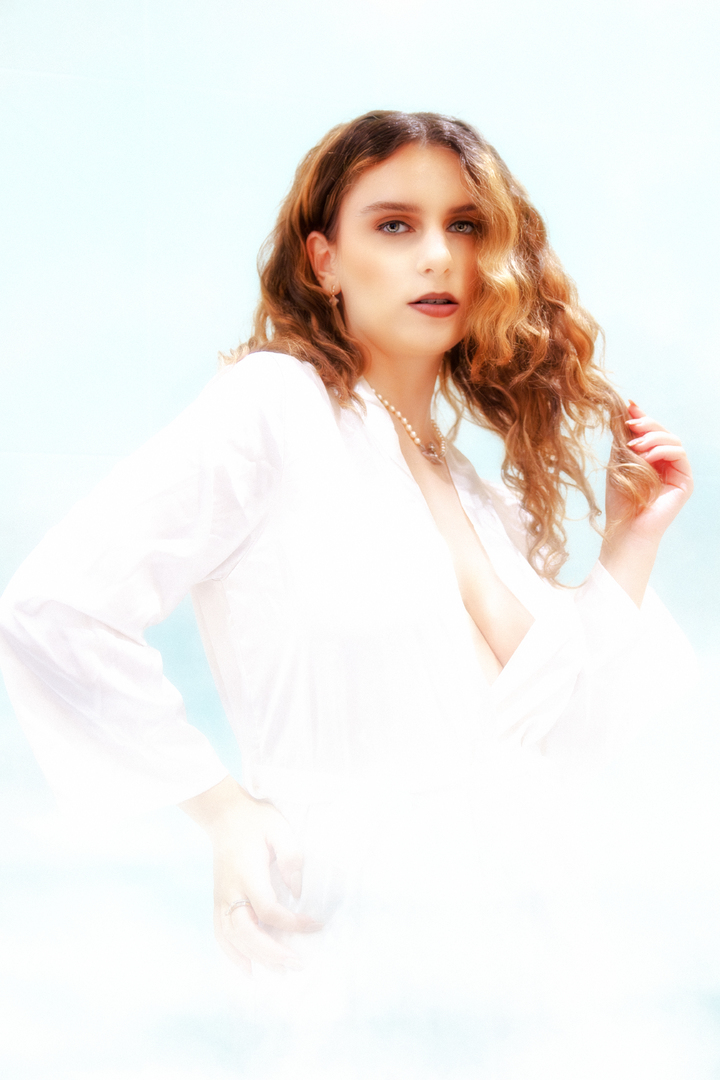 L’Éclat Vénus Suite Paris 1930
At the Ritz in Paris, 1930, Mademoiselle Ava Devereaux glows in a bright, dreamy wash of colour, the kind of soft, radiant palette that feels lifted straight from a Ritts inspired fantasy. Inside the shower, thick steam rises in cool, bluish curls, drifting across her wet skin and accentuating the elegant line of her cleavage. The whole scene feels lush, steamy, and boldly sensual - the height of 1930s Parisian luxury, where colour, heat, and glamour fuse into one luminous moment
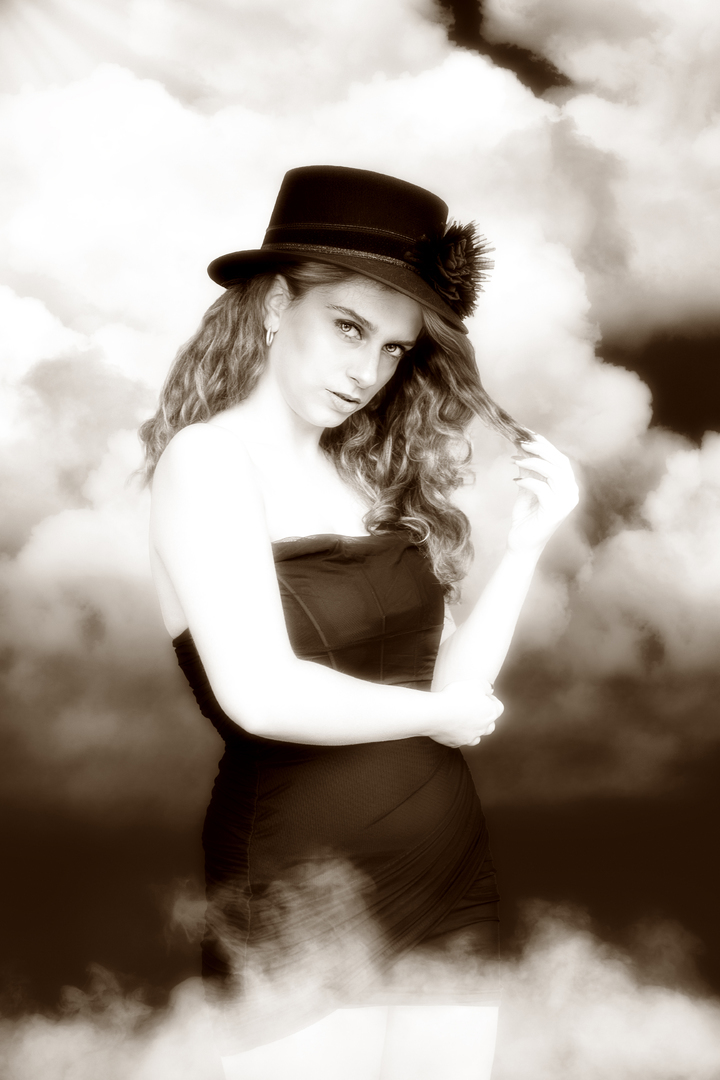 Elise Laurent in Paris Twilight 1923
Elise Laurent is portrayed here standing with a quiet, confident allure in a scene reminiscent of early Vogue portraiture, within the luminous depths of a Paris Twilight, 1923. The composition embraces a daring white on white aesthetic, where the ivory clouds merge seamlessly with the radiant skin tones of the subject. Flooded with a shimmering, soft light glow, the scene takes on a dreamlike brilliance that accentuates the fine film grain. This radiance forges a visual bridge between the soft tactility of the foreground clouds and the poised, sophisticated gaze Elise casts from beneath her hat, capturing a moment of pure, shimmering elegance
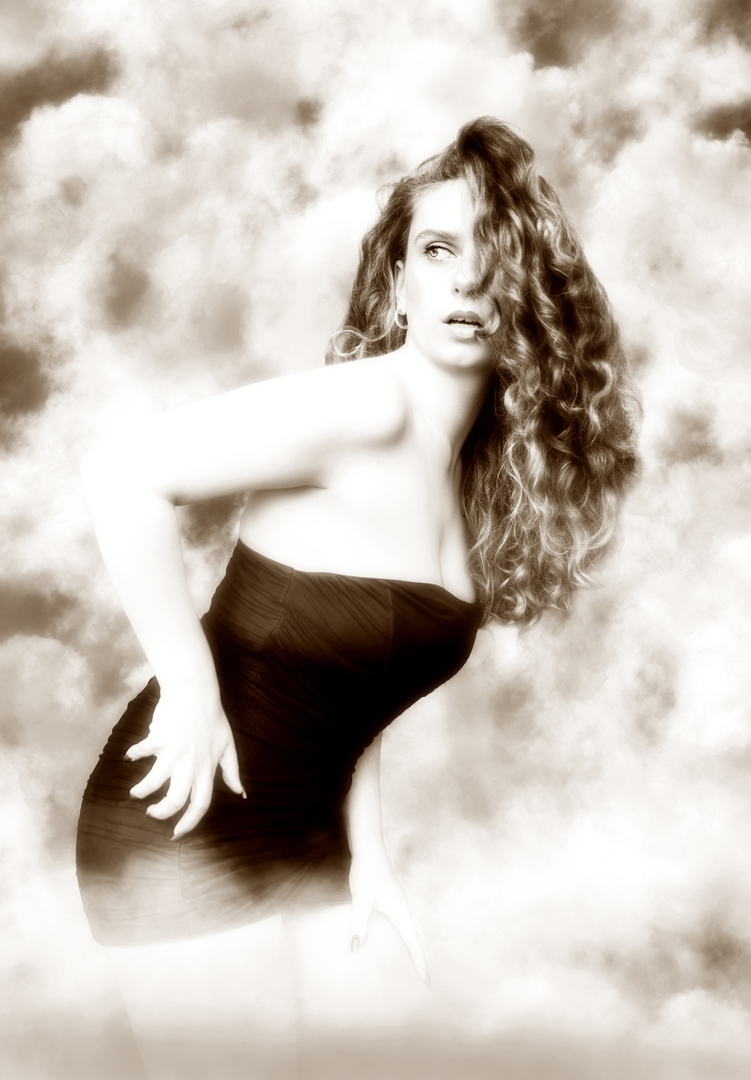 Geneviève de la Mare 1923
In a setting reminiscent of early Vogue portraiture, Geneviève de la Mare stands with a calm, self assured charm, her presence shaped by the dazzling, soft focus beauty that defined the Parisian avant garde of the early 1920s. The techniques used here are influenced by the atmospheric style of Adolf de Meyer, whether the scene is imagined at The Parisian Studio, a discreet atelier renowned for its theatrical lighting. A bloom of brilliance, drifting clouds, and enveloping mist soften the features into a surreal halo, creating a dreamy effect that reflects the glamour of 1923. The light film grain reinforces the period mood, placing Geneviève within that rare realm where fashion, drama, and myth momentarily speak the same language
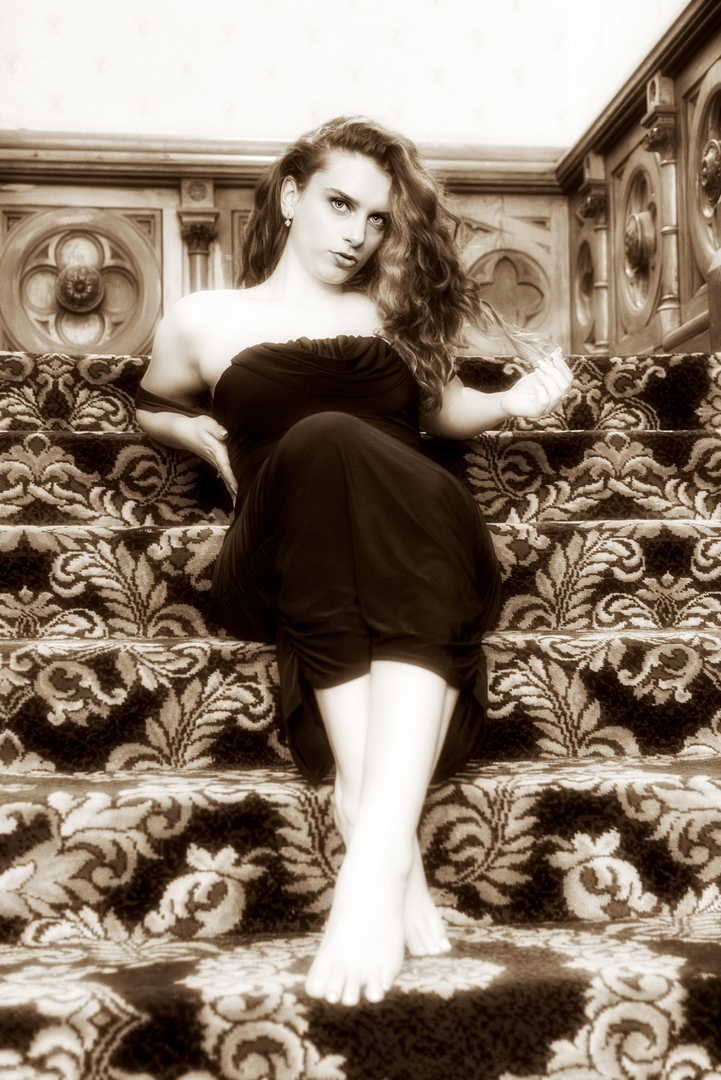 Mademoiselle Renee Valois at The Grand Hotel Paris 1920
On May 15th, 1920, Mademoiselle Renee Valois lounges along the carpeted steps
of the Grand Hotel in Paris, her form gently dissolving into a brilliant, dreamlike light. The radiant, high key atmosphere lends her presence a serene dignity, preserving her likeness with the
subtle grace of early twentieth century portrait photography. Soft focus bloom and Gaussian style blur melt the shapes of the scene into a delicate halo, while the film grain and deep sepia hue evoke
the character of an authentic 1920s print. Her languid, sensual posture reflects the eras fascination with theatrical glamour and sculpted light, capturing the essence of the decades most evocative
portraiture.
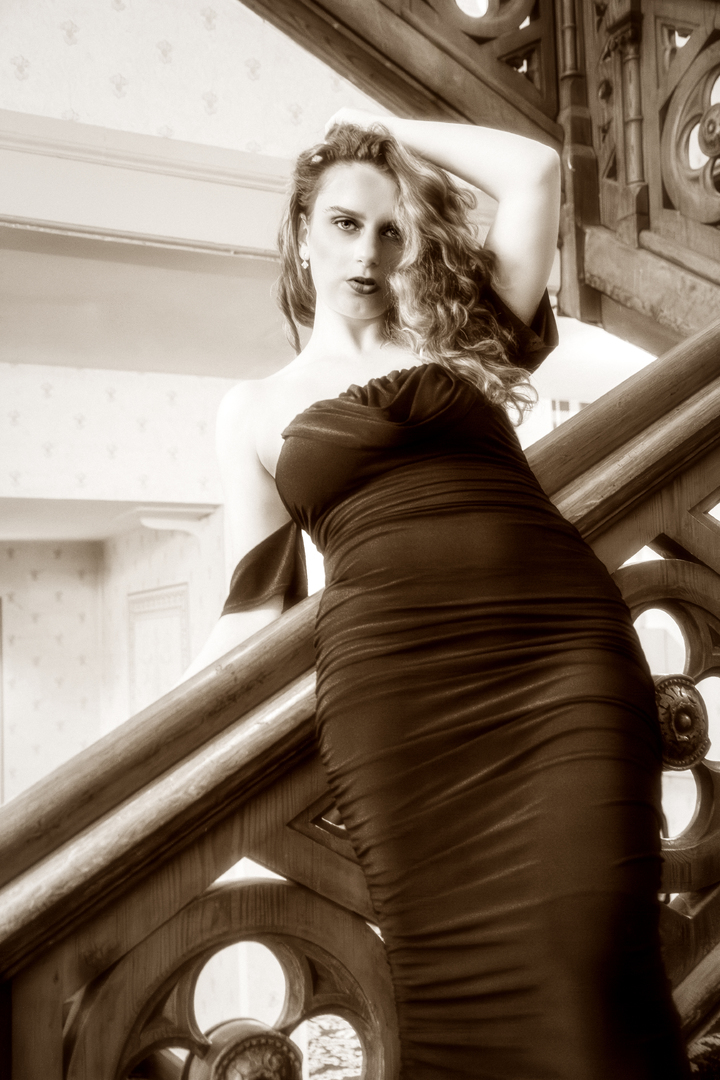 Mademoiselle Renée Valois - Paris 1920
Grand Hôtel in Paris on May 15th, 1920, Mademoiselle Renée Valois stands poised upon
the sweeping staircase where carved woodwork and ornate architectural details dissolve into a brilliant, dreamlike light. This luminous atmosphere lends her presence a quiet dignity, preserving her
likeness with the understated elegance of early twentieth century portrait photography.

Intentional diffusion and ICM soften the sharp lines of both figure and interior into a shimmering halo, while the film grain and deep sepia tonality complete the illusion of a genuine 1920s print.
Her seductive pose on the staircase echoes the era’s fascination with theatrical glamour and sculpted light.
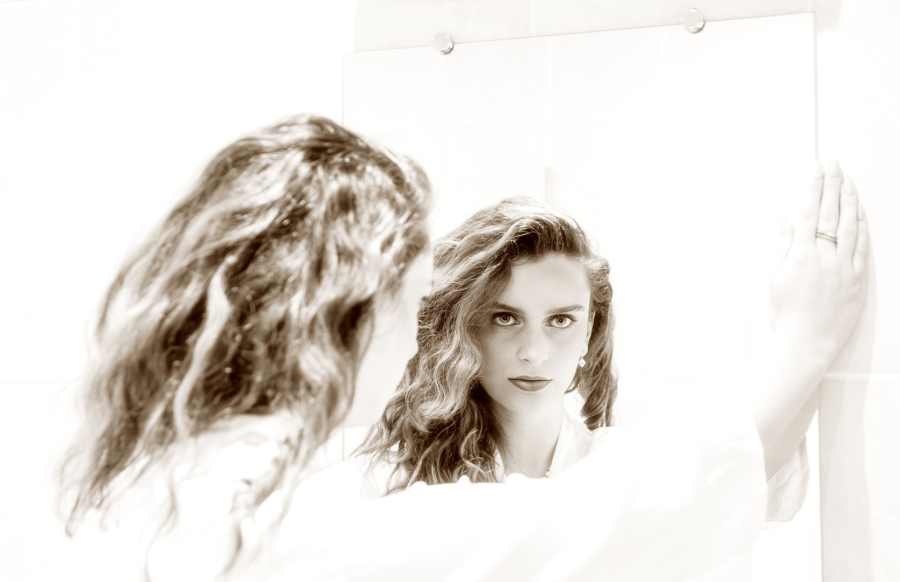 Fräulein Kiki von Hohenstein Room 101 Hotel Adlon 1920
Fräulein Kiki von Hohenstein stands within the bright, clinical luxury of her en suite room 101 at the Hotel Adlon, Berlin, Autumn 1920. The portrait embraces a daring white on white palette: the soft sheen of her silk robe set against polished bathroom tile, all immersed in a high key radiance that heightens the fine film grain. This brilliance creates a luminous tension between the tactile silk and the poised, introspective gaze she casts into the mirror. A faithful tonal rendering inspired by early Vogue plates, using sepia warmth and fine grain to echo the authentic softness of de Meyer’s 1910–1920 aesthetic
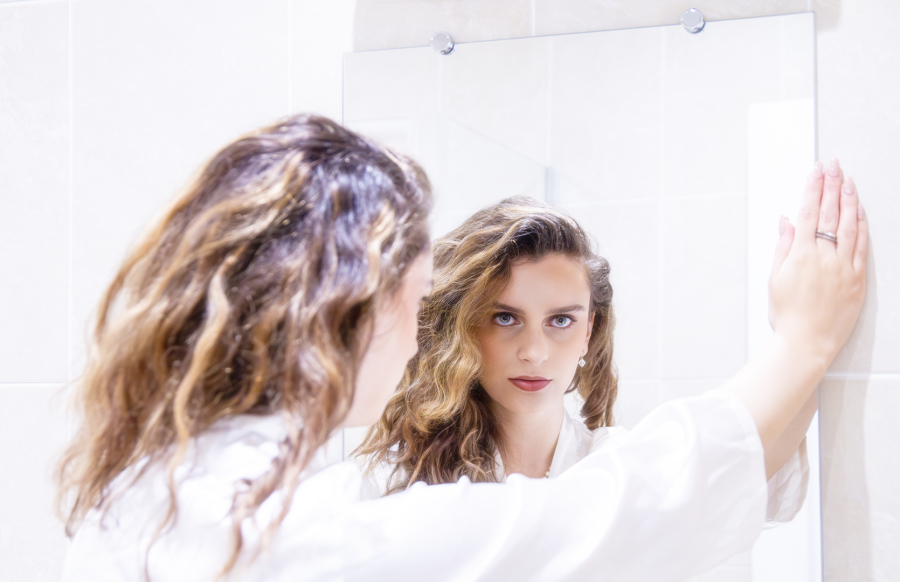 Fräulein Kiki von Hohenstein Room 101 Hotel Adlon 1920 - COLOUR
Fräulein Kiki von Hohenstein stands within the bright, clinical luxury of her en suite room 1o1 at the Hotel Adlon, Berlin, Autumn 1920. The portrait embraces a daring white on white palette: the soft sheen of her silk robe set against polished bathroom tile, all immersed in a high key radiance that heightens the fine film grain. This brilliance creates a luminous tension between the tactile silk and the poised, introspective gaze she casts into the mirror. Colour A contemporary interpretation that preserves the 1920s composition while introducing a subtle modern palette, giving the scene a refined, cinematic glow.
Inspired by Baron Adolf de Meyer, the image adopts his signature “halo” aesthetic backlit highlights that bleed gently through a diffused lens, dissolving hard edges into a silver toned, painterly atmosphere. The result transforms a modern interior into a dreamlike fashion tableau, echoing the ethereal glamour that defined early 1920s Vogue photography
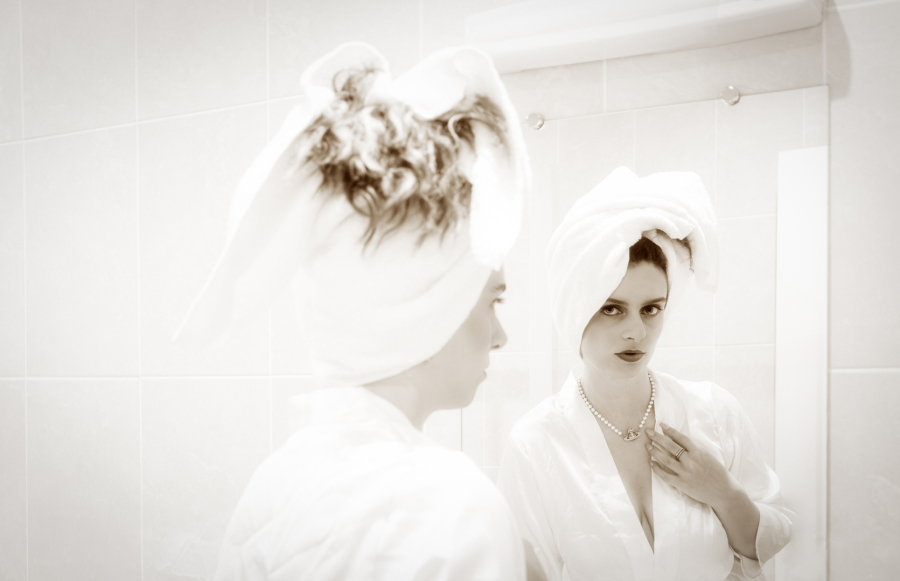 Fräulein Kiki von Hohenstein: Room 101, Hotel Adlon — Berlin, Autumn 1920
Fräulein Kiki von Hohenstein is portrayed within the bright, clinical luxury
of her en suite in Room 101 at the Hotel Adlon, Berlin, Autumn 1920. The composition embraces a daring
white‑on‑white aesthetic, setting the dense textures of towel and silk robe
against the polished, pale bathroom tiles. Flooded with light, the scene takes on a shimmering, high‑contrast radiance that accentuates the fine film grain. This brilliance forges a visual bridge
between the soft tactility of the foreground and the poised, sophisticated gaze Kiki casts into the mirror.
Inspired by Baron Adolf de Meyer, this image captures the "luminous" signature
of 1920s fashion photography. De Meyer revolutionized the era by backlighting his subjects, creating a shimmering "halo" effect that made silk and skin appear to glow from
within.
He achieved this dreamlike quality by using soft-focus lenses to "bleed" the highlights, intentionally dissolving harsh lines into a painterly, silver-toned atmosphere. By favoring this high-key palette, he transformed a physical space into a poetic vision, using a fine film grain to give the portrait the timeless, ethereal texture of a classic Vogue masterpiece.
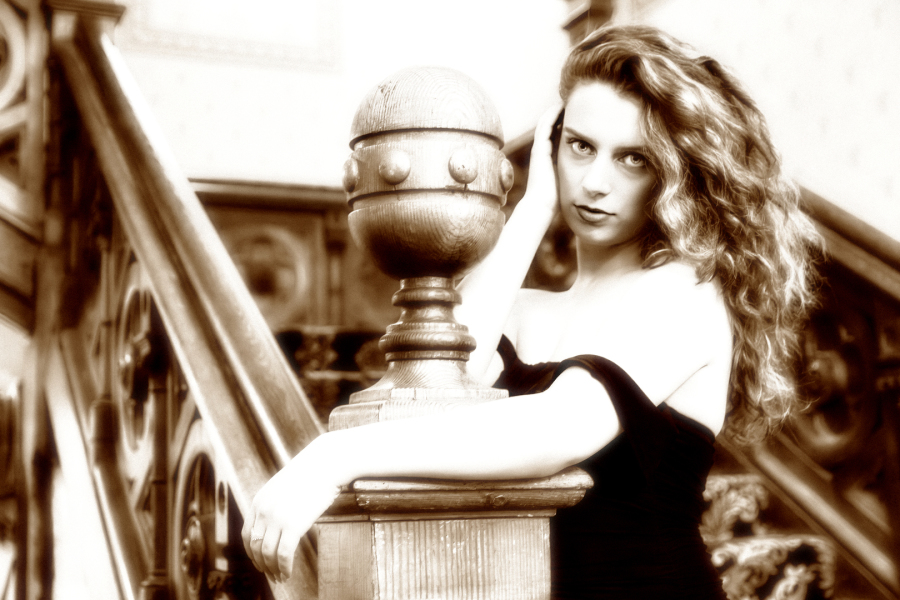 Mademoiselle Valois au Grand Hôtel Paris vers 1918
Mademoiselle Renée Valois is rendered in the radiant, high-key tonal depth of the Grand Hôtel in Paris, June 7th, 1918, where the sweeping woodwork
of the grand staircase and the ornate architectural details melt into a brilliant, dreamlike light. This luminous atmosphere lends her presence a quiet dignity, preserving her likeness with the
understated elegance of early twentieth-century vintage photography.
The
intentional diffusion – ICM - softens the sharp lines of Renée Valois and the hotel's interior into a shimmering halo, while the sepia tonality completes the
illusion.
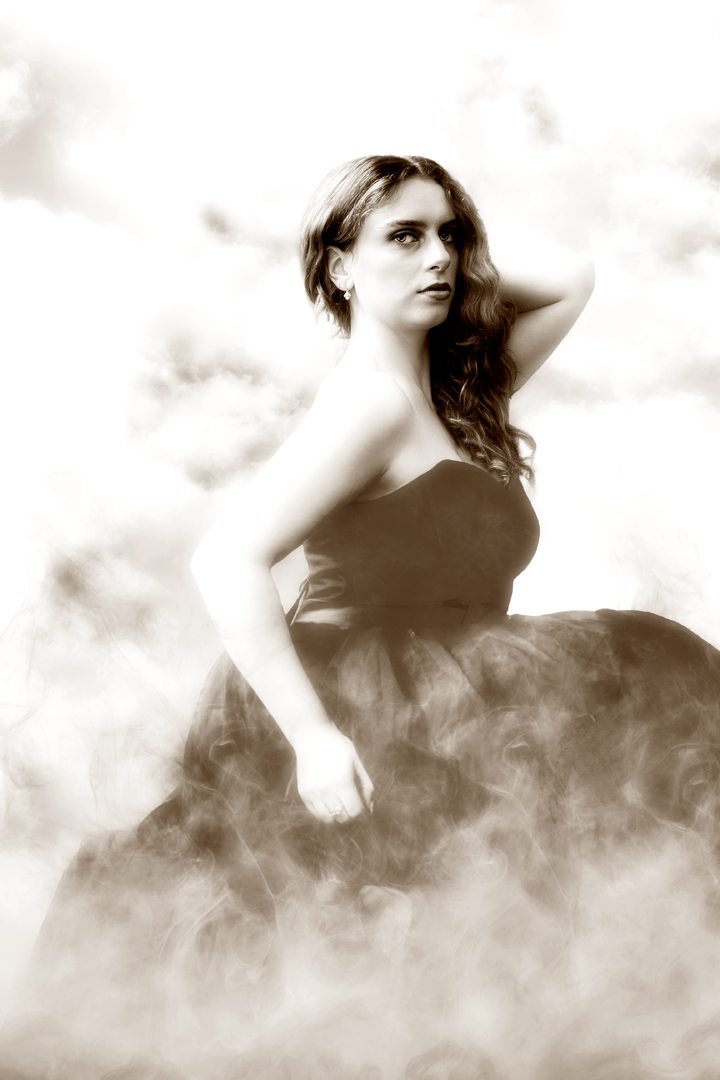 Mademoiselle Renée Valois - Une Heure de Silence 1915
A 1915 style photograph: Mademoiselle Renée
Valois is rendered in the soft, smokey tonal depth characteristic of the period’s portrait studios. The gentle sepia warmth and subdued atmosphere lend her presence a quiet dignity, preserving her
likeness with the understated elegance of early twentieth century vintage photography. The enveloping clouds and drifting smoke echo the soft focus aesthetic favoured by artists of the 1910s, a
technique embraced by photographers such as Edward Steichen and Baron Adolf de Meyer to elevate their subjects into mythic, goddess like figures. The sepia tonality completes the illusion, imparting
an Old World luxury that defines the era’s most evocative portraiture.
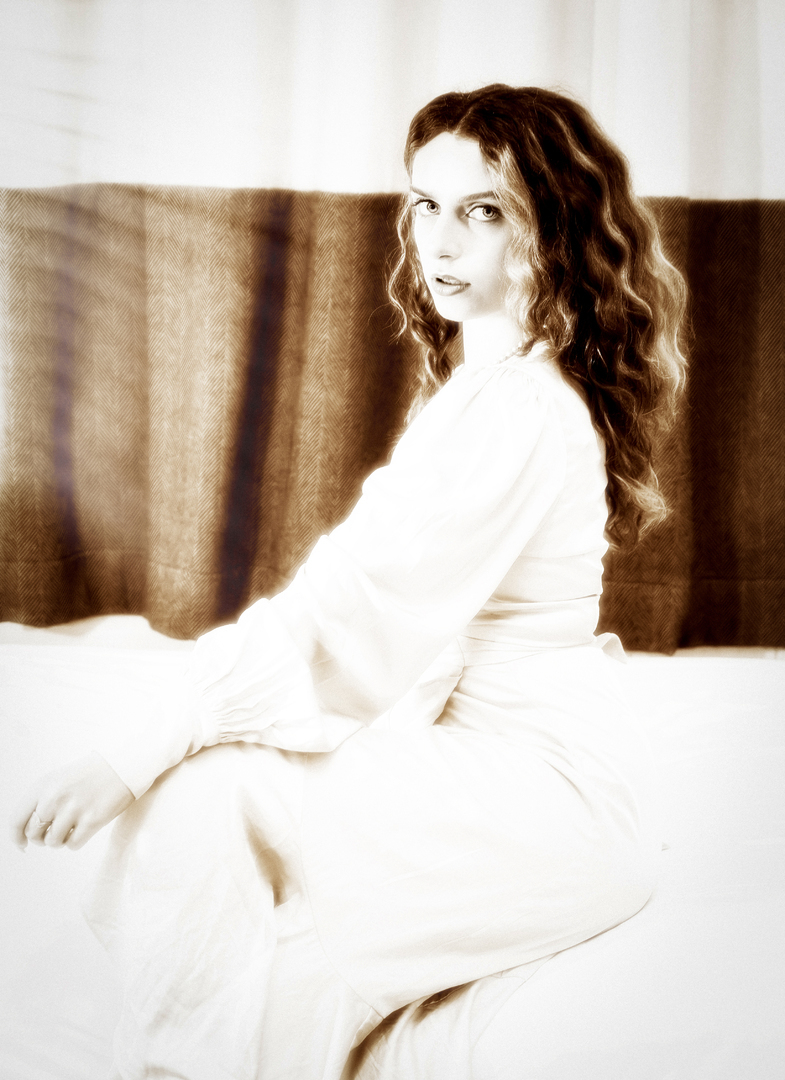 Mademoiselle Duboi at the Westin Paris Vendome 1919
Mademoiselle Antoinette Duboi is rendered in the radiant, high key tonal depth characteristic of the Hotel The Westin Paris Vendome in
the late summer of 1919. Her private en suite dissolves into a brilliant, dreamlike glow, the rooms contours melting into a soft, luminous haze and fine film grain. This atmosphere lends her presence
a quiet, patrician dignity, preserving her likeness with the understated elegance of early twentieth century Parisian portraiture. The intentional diffusion ICM gently blurs the sharp lines of both
sitter and interior, from the delicate curves of the antique vanity to the fall of her garment, enveloping her in a shimmering halo. The warm sepia tonality completes the illusion, echoing the
refined photographic sensibilities of the era
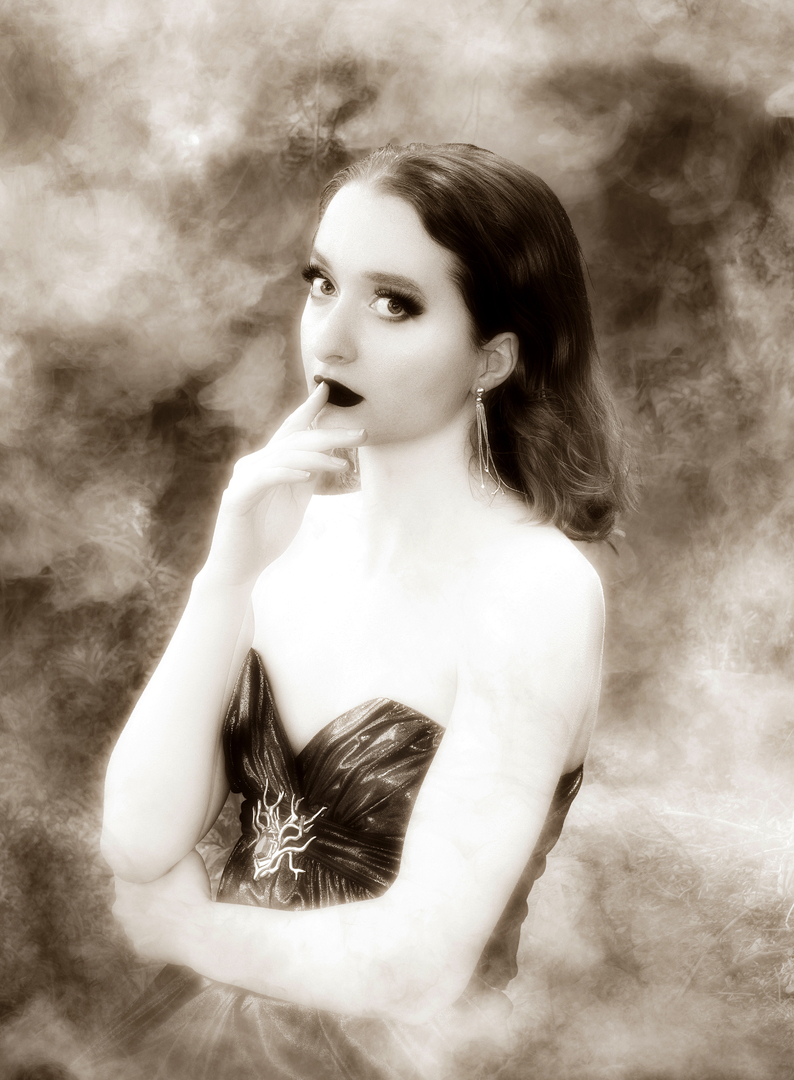 Margo Beaumont Smoke Dream 1928
Margo Beaumont Photographed in a private garden on the outskirts of Paris in 1928, the portrait captures Beaumont in a moment of poised stillness, her expression
held between thought and performance. The drifting smoke around her is not theatrical excess but a deliberate element of the composition, softening the lines of the frame and giving her figure a
suspended, dream lit presence. The balance of light, smoke and stillness here reflects that movement, presenting Beaumont not as an emblem of fantasy but as a figure shaped by tone, arrangement and
the subtle architecture of the frame.
Inspired by the pioneering work of Curtis Moffat. This study utilizes his specific techniques mastering lens diffusion and atmospheric craft to achieve a signature dreamy effect. By blending high
contrast portraiture with a light film grain and deliberate light bleed, the piece replicates the technical depth and radiant softness characteristic of Moffat’s era
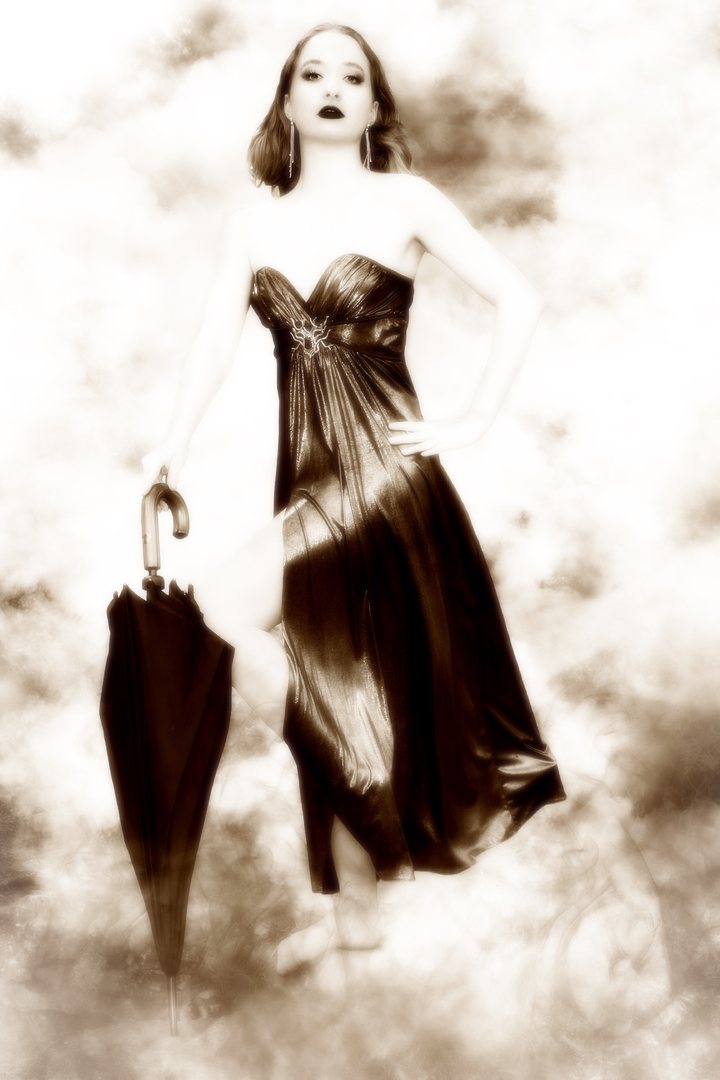 Fräulein Marlene Von Essen Berlin 1929
The photograph, set in a private garden on Berlin’s western outskirts in 1929, captures Fräulein Marlene von Essen standing poised beneath a blanket of smoke and cloudy light.
Her pose is calm yet subtly dramatic, with one hand at her hip and the other holding a closed umbrella. The sepia tones remain smooth and grain free because the soft focus diffusion was hand shaped
to give her figure a bright, sculptural glow - a radiance that rises directly from her form rather than floating around it. Smoke drifting across the garden softens the scene’s edges, giving the
moment a suspended, dreamlike quality.
Created as a contemporary tribute to the experimental portrait lighting associated with Curtis Moffat
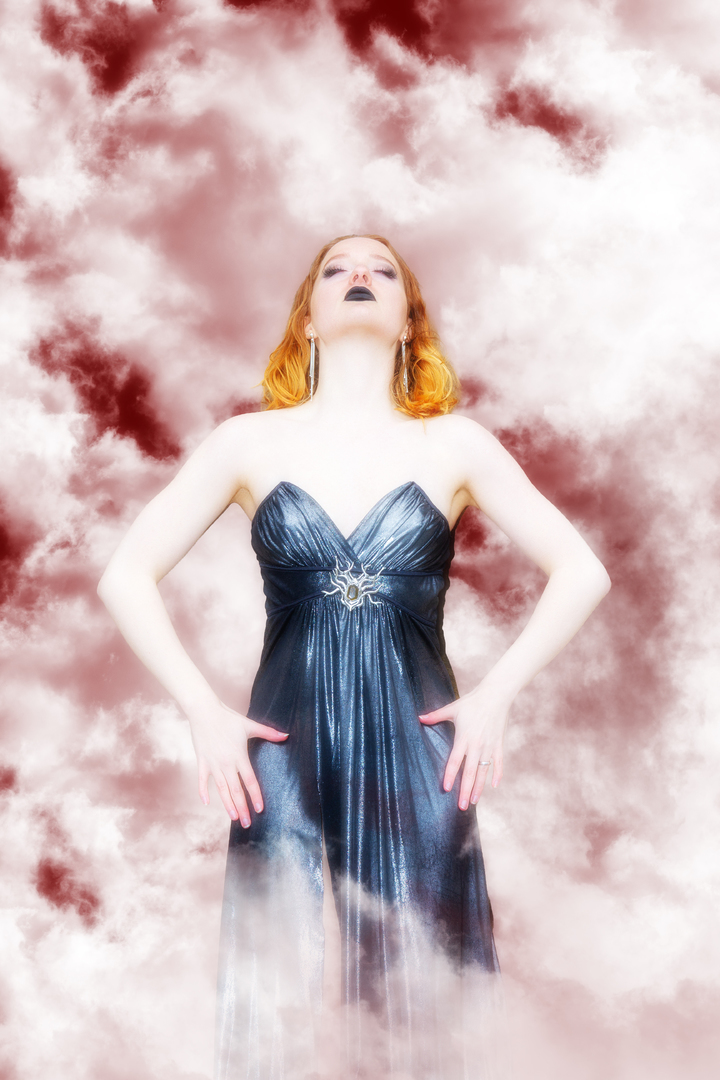 Mademoiselle Élodie Lefebvre 1930 Colour Scene
This surrealist study, set in a private estate garden in Giverny, France in 1930, examines the relationship between light, atmosphere and early modern fashion. Mademoiselle Élodie Lefebvre is engulfed in a supernatural high key bloom of drifting clouds, combining the structural beauty of 1930s couture with an abstract, ethereal dreamscape. Inspired by Baron de Meyer's atmospheric sensibility, the portrait combines hand layered Photoshop CC cloud brushes and selective Gaussian diffusion to achieve a smooth, grain-free immersion of the composition in a bright crimson and white dreamy effect beneath a ruby tinted sky
 Print
Print