
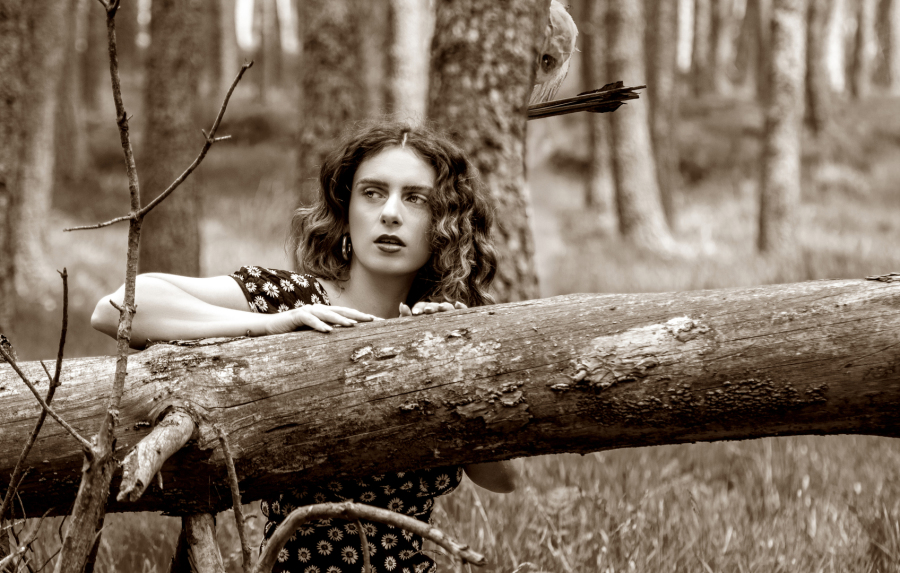
1910-1920 Vintage Style Photography
The sepia warmth and sculpted atmospheric light give the photographs a serene, early‑twentieth‑century dignity. Mist, drifting smoke, and clouded diffusion soften the models into a light, dreamy blur, while the purposeful ICM removes structural detail in the style of Edward Steichen and Baron Adolf de Meyer. A hint of film grain — noticeable but never overbearing — adds to the historical character, completing the illusion of a vintage plate from the 1910–1925 era.
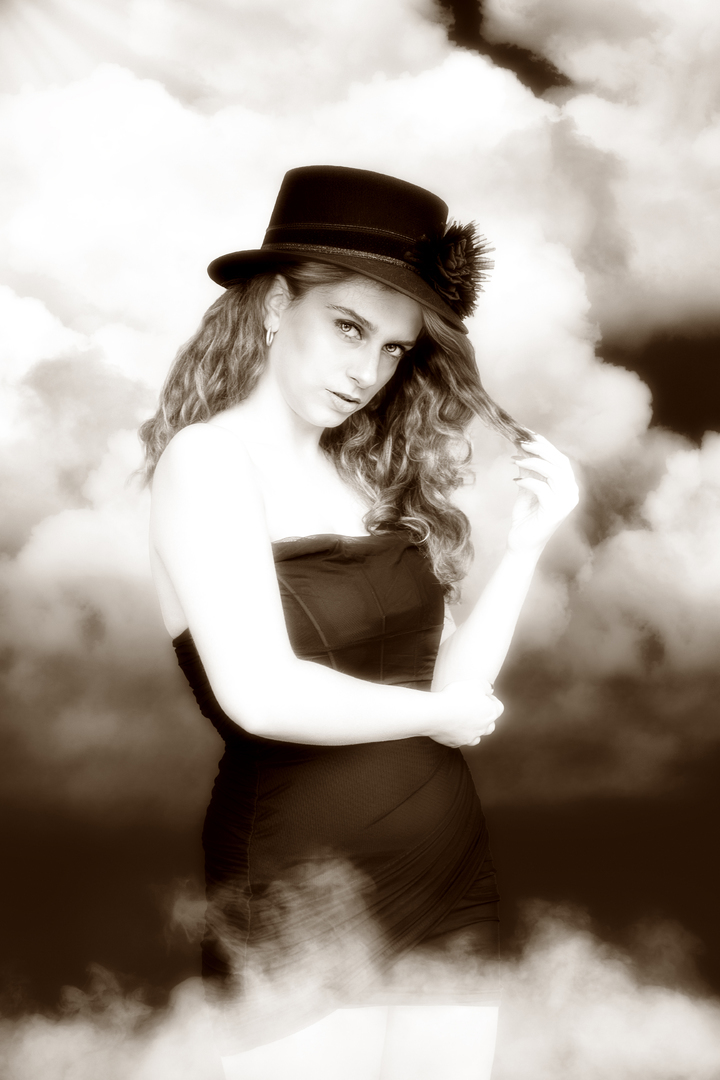 Elise Laurent in Paris Twilight 1923
Elise Laurent is portrayed here standing with a quiet, confident allure in a scene reminiscent of early Vogue portraiture, within the luminous depths of a Paris Twilight, 1923. The composition embraces a daring white on white aesthetic, where the ivory clouds merge seamlessly with the radiant skin tones of the subject. Flooded with a shimmering, soft light glow, the scene takes on a dreamlike brilliance that accentuates the fine film grain. This radiance forges a visual bridge between the soft tactility of the foreground clouds and the poised, sophisticated gaze Elise casts from beneath her hat, capturing a moment of pure, shimmering elegance
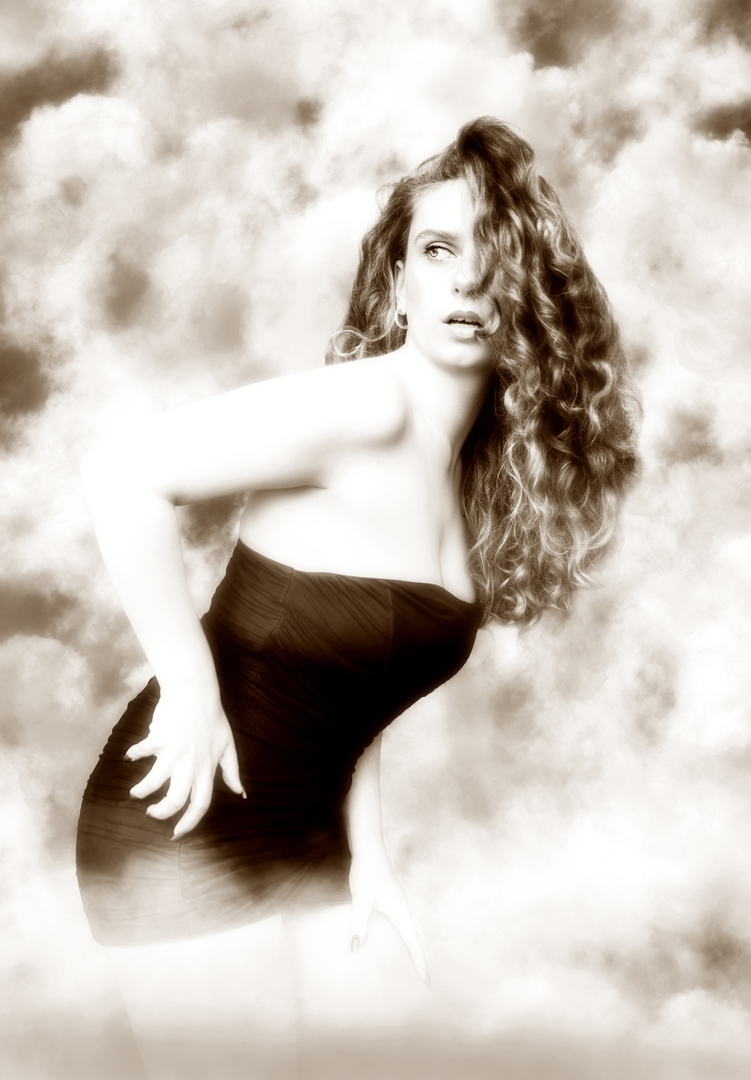 Geneviève de la Mare 1923
In a setting reminiscent of early Vogue portraiture, Geneviève de la Mare stands with a calm, self assured charm, her presence shaped by the dazzling, soft focus beauty that defined the Parisian avant garde of the early 1920s. The techniques used here are influenced by the atmospheric style of Adolf de Meyer, whether the scene is imagined at The Parisian Studio, a discreet atelier renowned for its theatrical lighting. A bloom of brilliance, drifting clouds, and enveloping mist soften the features into a surreal halo, creating a dreamy effect that reflects the glamour of 1923. The light film grain reinforces the period mood, placing Geneviève within that rare realm where fashion, drama, and myth momentarily speak the same language
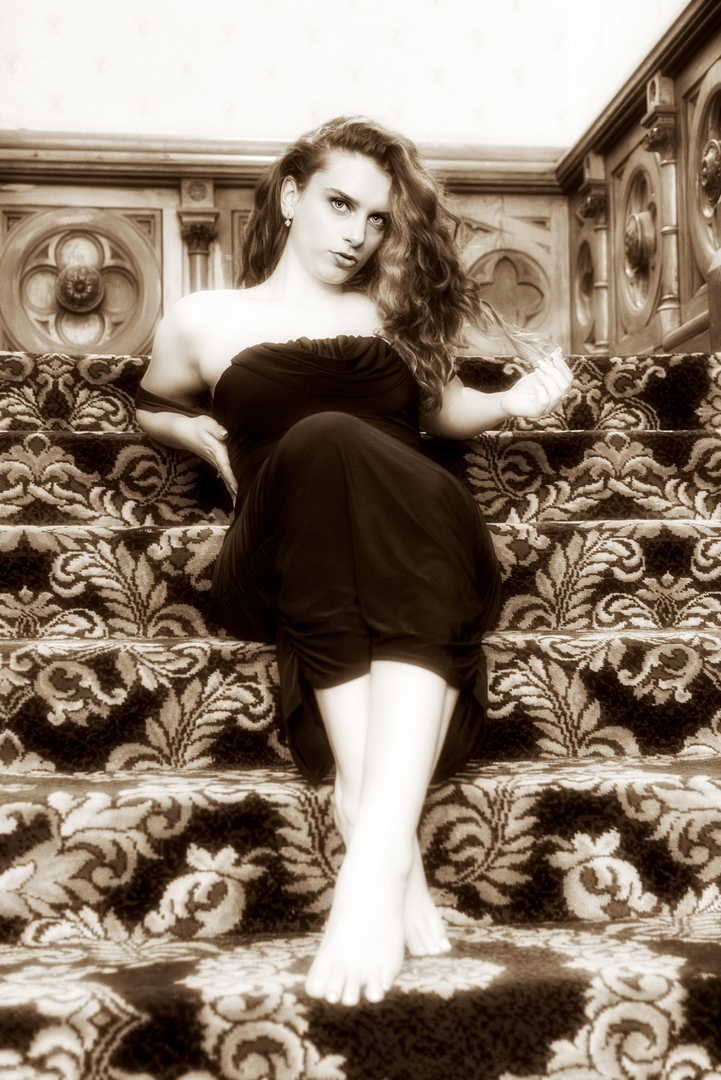 Mademoiselle Renee Valois at The Grand Hotel Paris 1920
On May 15th, 1920, Mademoiselle Renee Valois lounges along the carpeted steps
of the Grand Hotel in Paris, her form gently dissolving into a brilliant, dreamlike light. The radiant, high key atmosphere lends her presence a serene dignity, preserving her likeness with the
subtle grace of early twentieth century portrait photography. Soft focus bloom and Gaussian style blur melt the shapes of the scene into a delicate halo, while the film grain and deep sepia hue evoke
the character of an authentic 1920s print. Her languid, sensual posture reflects the eras fascination with theatrical glamour and sculpted light, capturing the essence of the decades most evocative
portraiture.
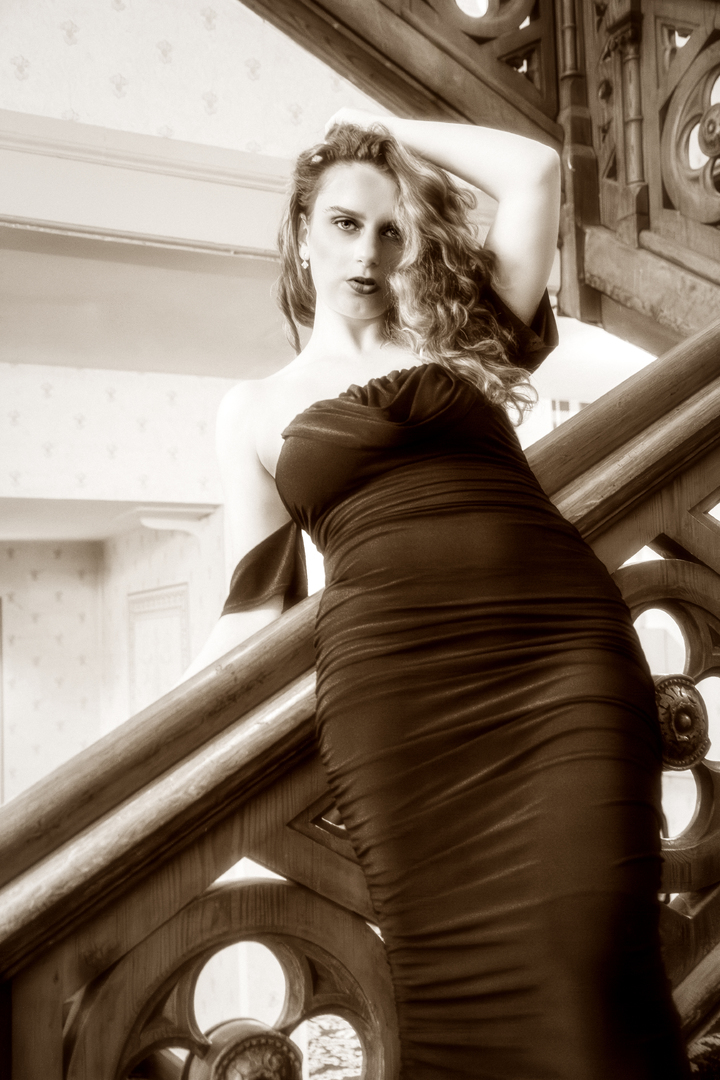 Mademoiselle Renée Valois - Paris 1920
Grand Hôtel in Paris on May 15th, 1920, Mademoiselle Renée Valois stands poised upon
the sweeping staircase where carved woodwork and ornate architectural details dissolve into a brilliant, dreamlike light. This luminous atmosphere lends her presence a quiet dignity, preserving her
likeness with the understated elegance of early twentieth century portrait photography.

Intentional diffusion and ICM soften the sharp lines of both figure and interior into a shimmering halo, while the film grain and deep sepia tonality complete the illusion of a genuine 1920s print.
Her seductive pose on the staircase echoes the era’s fascination with theatrical glamour and sculpted light.
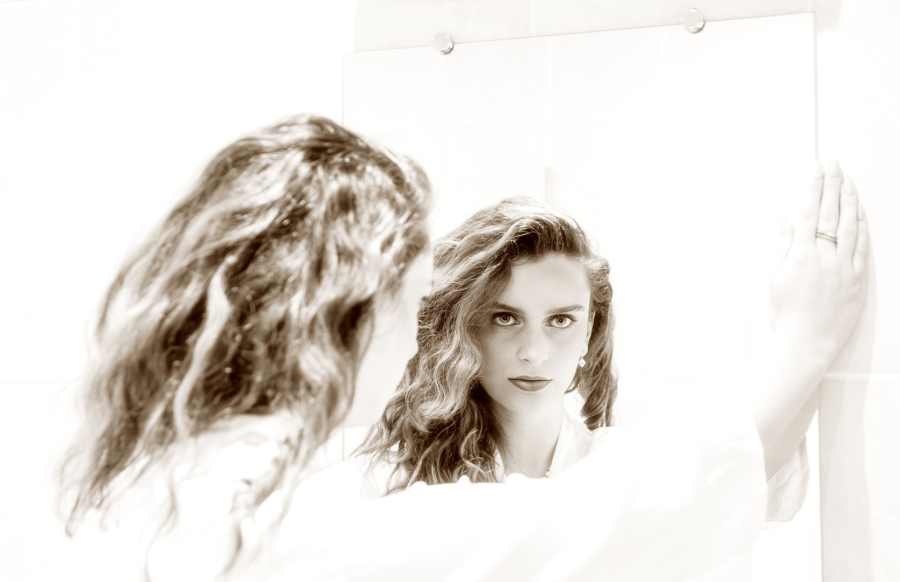 Fräulein Kiki von Hohenstein Room 101 Hotel Adlon 1920
Fräulein Kiki von Hohenstein stands within the bright, clinical luxury of her en suite room 101 at the Hotel Adlon, Berlin, Autumn 1920. The portrait embraces a daring white on white palette: the soft sheen of her silk robe set against polished bathroom tile, all immersed in a high key radiance that heightens the fine film grain. This brilliance creates a luminous tension between the tactile silk and the poised, introspective gaze she casts into the mirror. A faithful tonal rendering inspired by early Vogue plates, using sepia warmth and fine grain to echo the authentic softness of de Meyer’s 1910–1920 aesthetic
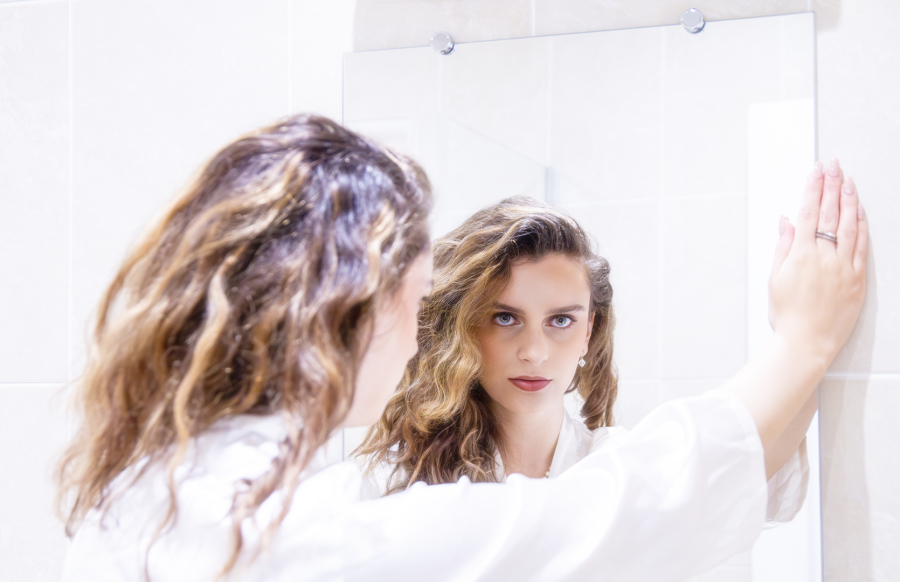 Fräulein Kiki von Hohenstein Room 101 Hotel Adlon 1920 - COLOUR
Fräulein Kiki von Hohenstein stands within the bright, clinical luxury of her en suite room 1o1 at the Hotel Adlon, Berlin, Autumn 1920. The portrait embraces a daring white on white palette: the soft sheen of her silk robe set against polished bathroom tile, all immersed in a high key radiance that heightens the fine film grain. This brilliance creates a luminous tension between the tactile silk and the poised, introspective gaze she casts into the mirror. Colour A contemporary interpretation that preserves the 1920s composition while introducing a subtle modern palette, giving the scene a refined, cinematic glow.
Inspired by Baron Adolf de Meyer, the image adopts his signature “halo” aesthetic backlit highlights that bleed gently through a diffused lens, dissolving hard edges into a silver toned, painterly atmosphere. The result transforms a modern interior into a dreamlike fashion tableau, echoing the ethereal glamour that defined early 1920s Vogue photography
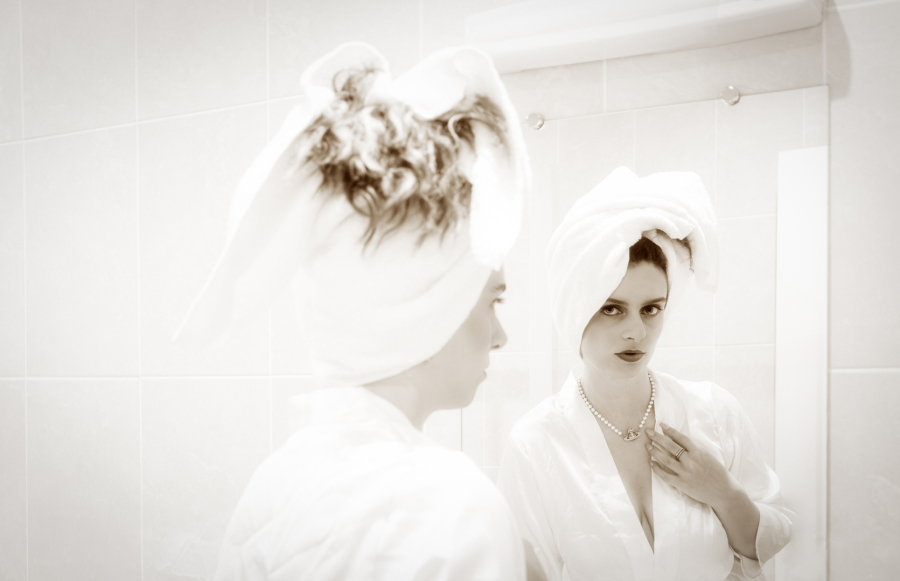 Fräulein Kiki von Hohenstein: Room 101, Hotel Adlon — Berlin, Autumn 1920
Fräulein Kiki von Hohenstein is portrayed within the bright, clinical luxury
of her en suite in Room 101 at the Hotel Adlon, Berlin, Autumn 1920. The composition embraces a daring
white‑on‑white aesthetic, setting the dense textures of towel and silk robe
against the polished, pale bathroom tiles. Flooded with light, the scene takes on a shimmering, high‑contrast radiance that accentuates the fine film grain. This brilliance forges a visual bridge
between the soft tactility of the foreground and the poised, sophisticated gaze Kiki casts into the mirror.
Inspired by Baron Adolf de Meyer, this image captures the "luminous" signature
of 1920s fashion photography. De Meyer revolutionized the era by backlighting his subjects, creating a shimmering "halo" effect that made silk and skin appear to glow from
within.
He achieved this dreamlike quality by using soft-focus lenses to "bleed" the highlights, intentionally dissolving harsh lines into a painterly, silver-toned atmosphere. By favoring this high-key palette, he transformed a physical space into a poetic vision, using a fine film grain to give the portrait the timeless, ethereal texture of a classic Vogue masterpiece.
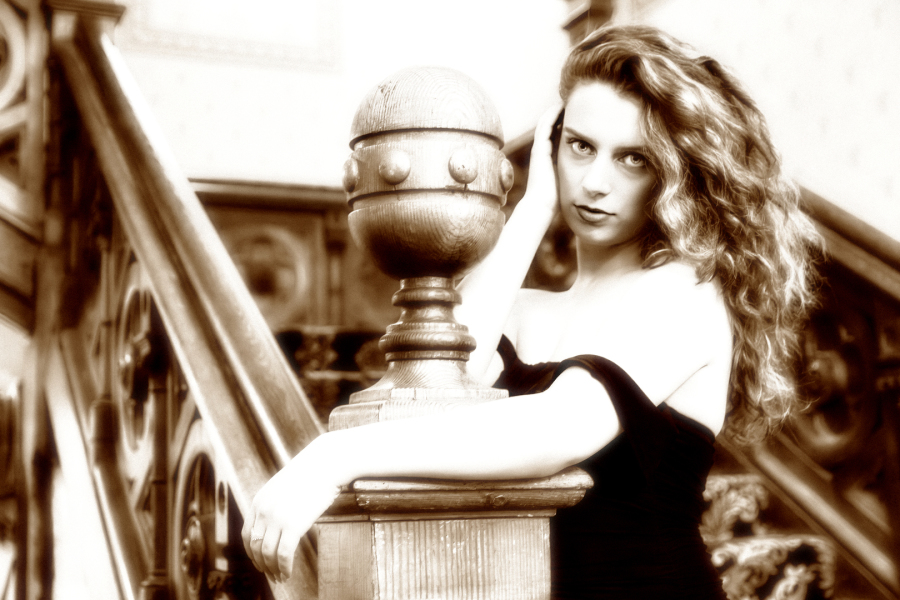 Mademoiselle Valois au Grand Hôtel Paris vers 1918
Mademoiselle Renée Valois is rendered in the radiant, high-key tonal depth of the Grand Hôtel in Paris, June 7th, 1918, where the sweeping woodwork
of the grand staircase and the ornate architectural details melt into a brilliant, dreamlike light. This luminous atmosphere lends her presence a quiet dignity, preserving her likeness with the
understated elegance of early twentieth-century vintage photography.
The
intentional diffusion – ICM - softens the sharp lines of Renée Valois and the hotel's interior into a shimmering halo, while the sepia tonality completes the
illusion.
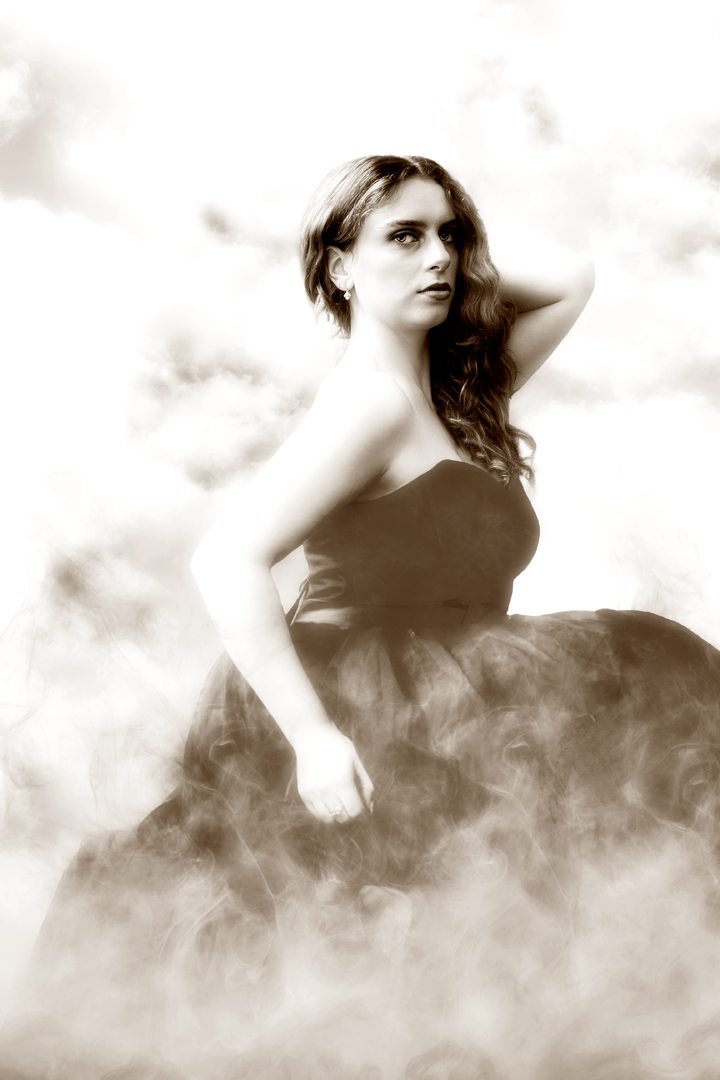 Mademoiselle Renée Valois - Une Heure de Silence 1915
A 1915 style photograph: Mademoiselle Renée
Valois is rendered in the soft, smokey tonal depth characteristic of the period’s portrait studios. The gentle sepia warmth and subdued atmosphere lend her presence a quiet dignity, preserving her
likeness with the understated elegance of early twentieth century vintage photography. The enveloping clouds and drifting smoke echo the soft focus aesthetic favoured by artists of the 1910s, a
technique embraced by photographers such as Edward Steichen and Baron Adolf de Meyer to elevate their subjects into mythic, goddess like figures. The sepia tonality completes the illusion, imparting
an Old World luxury that defines the era’s most evocative portraiture.
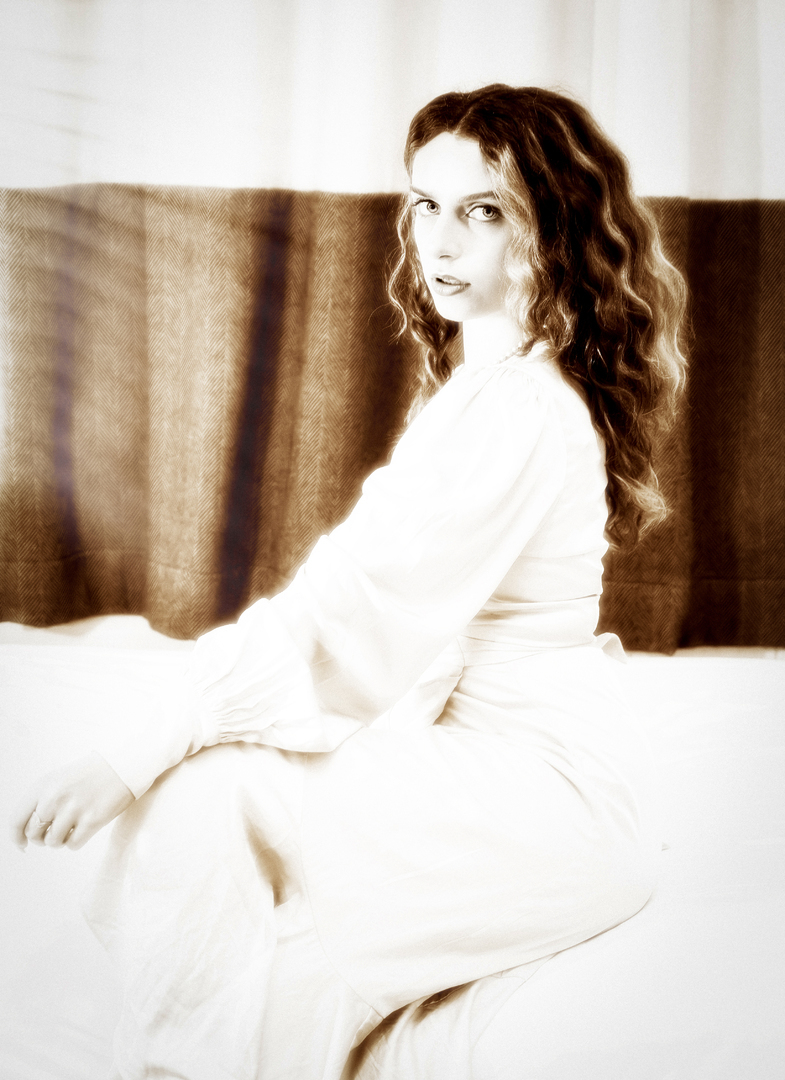 Mademoiselle Duboi at the Westin Paris Vendome 1919
Mademoiselle Antoinette Duboi is rendered in the radiant, high key tonal depth characteristic of the Hotel The Westin Paris Vendome in
the late summer of 1919. Her private en suite dissolves into a brilliant, dreamlike glow, the rooms contours melting into a soft, luminous haze and fine film grain. This atmosphere lends her presence
a quiet, patrician dignity, preserving her likeness with the understated elegance of early twentieth century Parisian portraiture. The intentional diffusion ICM gently blurs the sharp lines of both
sitter and interior, from the delicate curves of the antique vanity to the fall of her garment, enveloping her in a shimmering halo. The warm sepia tonality completes the illusion, echoing the
refined photographic sensibilities of the era
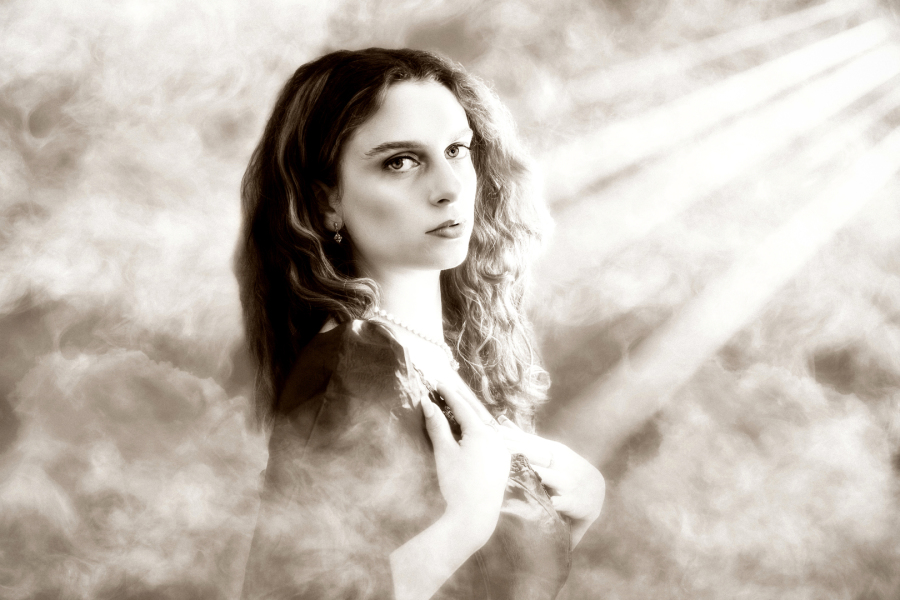 Mademoiselle Renée Valois L’Égérie des Brumes 1912
A 1910-1915 style photograph: Mademoiselle Renée Valois is rendered in the soft, smokey tonal depth characteristic of the period’s portrait studios. The gentle sepia warmth and subdued atmosphere lend her presence a quiet dignity, preserving her likeness with the understated elegance of early twentieth century vintage photography. The enveloping clouds and drifting smoke echo the soft focus aesthetic favoured by artists of the 1910s, a technique embraced by photographers such as Edward Steichen and Baron Adolf de Meyer to elevate their subjects into mythic, goddess like figures. The sepia tonality completes the illusion, imparting an Old World luxury that defines the era’s most evocative portraiture.
 Print
Print