
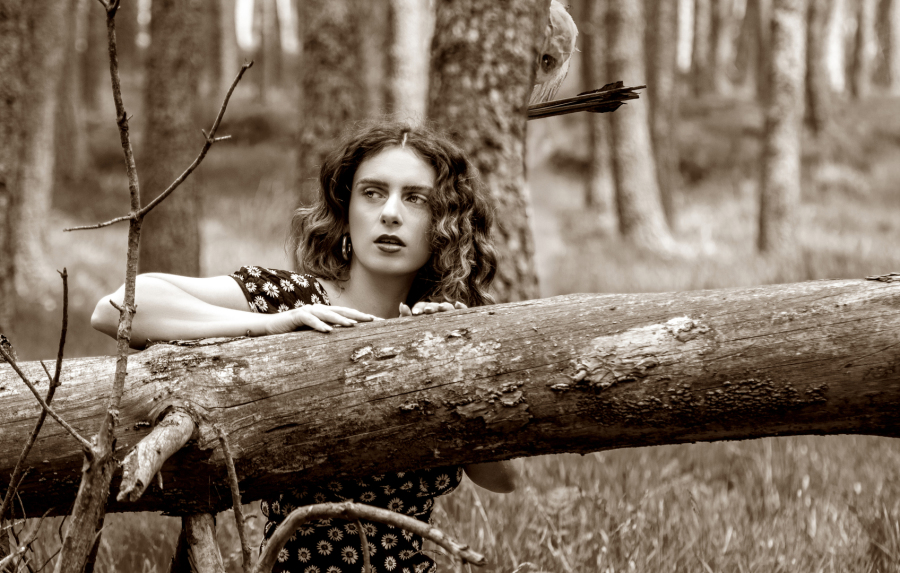
1910-1920 Vintage Style Photography
The sepia warmth and sculpted atmospheric light give the photographs a serene, early‑twentieth‑century dignity. Mist, drifting smoke, and clouded diffusion soften the models into a light, dreamy blur, while the purposeful ICM removes structural detail in the style of Edward Steichen and Baron Adolf de Meyer. A hint of film grain — noticeable but never overbearing — adds to the historical character, completing the illusion of a vintage plate from the 1910–1920 era.
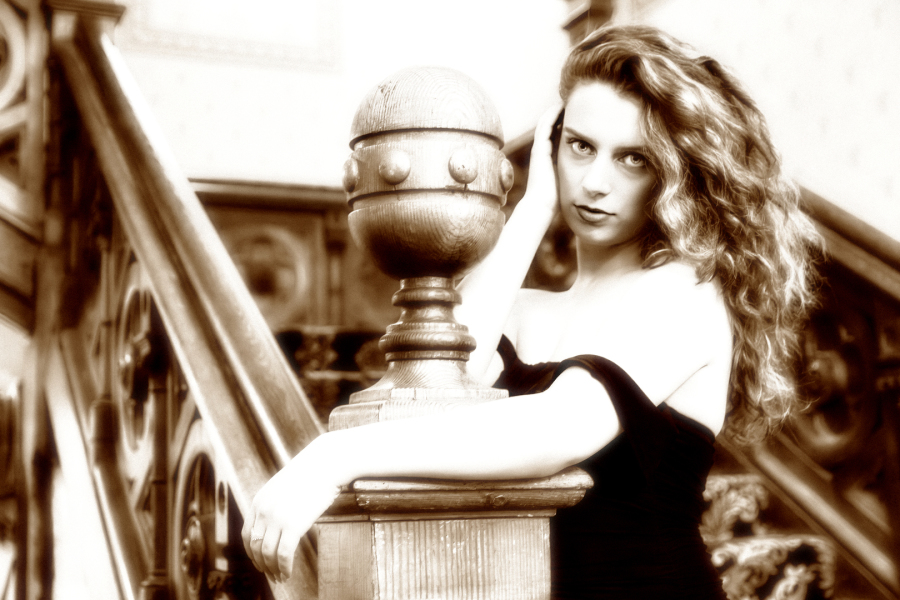 Mademoiselle Valois au Grand Hôtel Paris vers 1918
Mademoiselle Renée Valois is rendered in the radiant, high-key tonal depth of the Grand Hôtel in Paris, June 7th, 1918, where the sweeping woodwork
of the grand staircase and the ornate architectural details melt into a brilliant, dreamlike light. This luminous atmosphere lends her presence a quiet dignity, preserving her likeness with the
understated elegance of early twentieth-century vintage photography.
The
intentional diffusion – ICM - softens the sharp lines of Renée Valois and the hotel's interior into a shimmering halo, while the sepia tonality completes the
illusion.
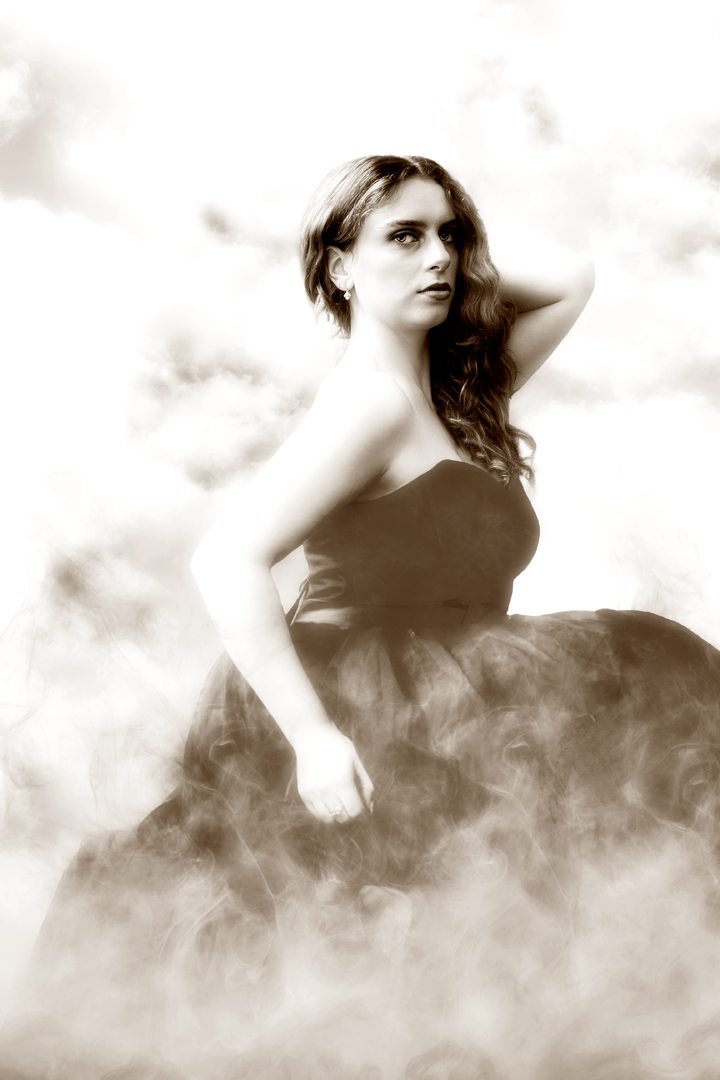 Mademoiselle Renée Valois - Une Heure de Silence 1915
A 1915 style photograph: Mademoiselle Renée Valois is rendered in the soft, smokey tonal depth characteristic of the period’s portrait studios. The gentle sepia warmth and subdued atmosphere lend her presence a quiet dignity, preserving her likeness with the understated elegance of early twentieth century vintage photography. The enveloping clouds and drifting smoke echo the soft focus aesthetic favoured by artists of the 1910s, a technique embraced by photographers such as Edward Steichen and Baron Adolf de Meyer to elevate their subjects into mythic, goddess like figures. The sepia tonality completes the illusion, imparting an Old World luxury that defines the era’s most evocative portraiture.
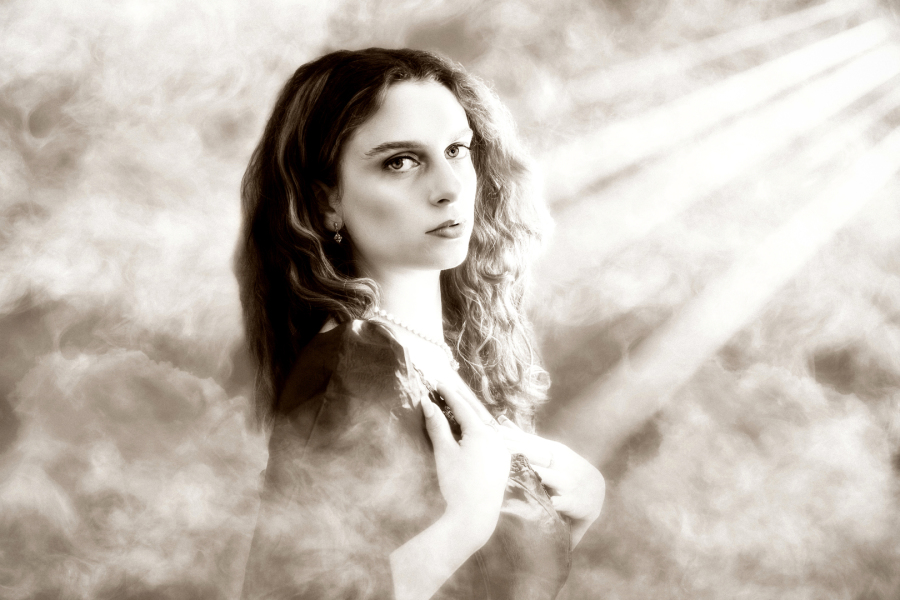 Mademoiselle Renée Valois L’Égérie des Brumes 1912
A 1910-1915 style photograph: Mademoiselle Renée Valois is rendered in the soft, smokey tonal depth characteristic of the period’s portrait studios. The gentle sepia warmth and subdued atmosphere lend her presence a quiet dignity, preserving her likeness with the understated elegance of early twentieth century vintage photography. The enveloping clouds and drifting smoke echo the soft focus aesthetic favoured by artists of the 1910s, a technique embraced by photographers such as Edward Steichen and Baron Adolf de Meyer to elevate their subjects into mythic, goddess like figures. The sepia tonality completes the illusion, imparting an Old World luxury that defines the era’s most evocative portraiture.
 Print
Print